
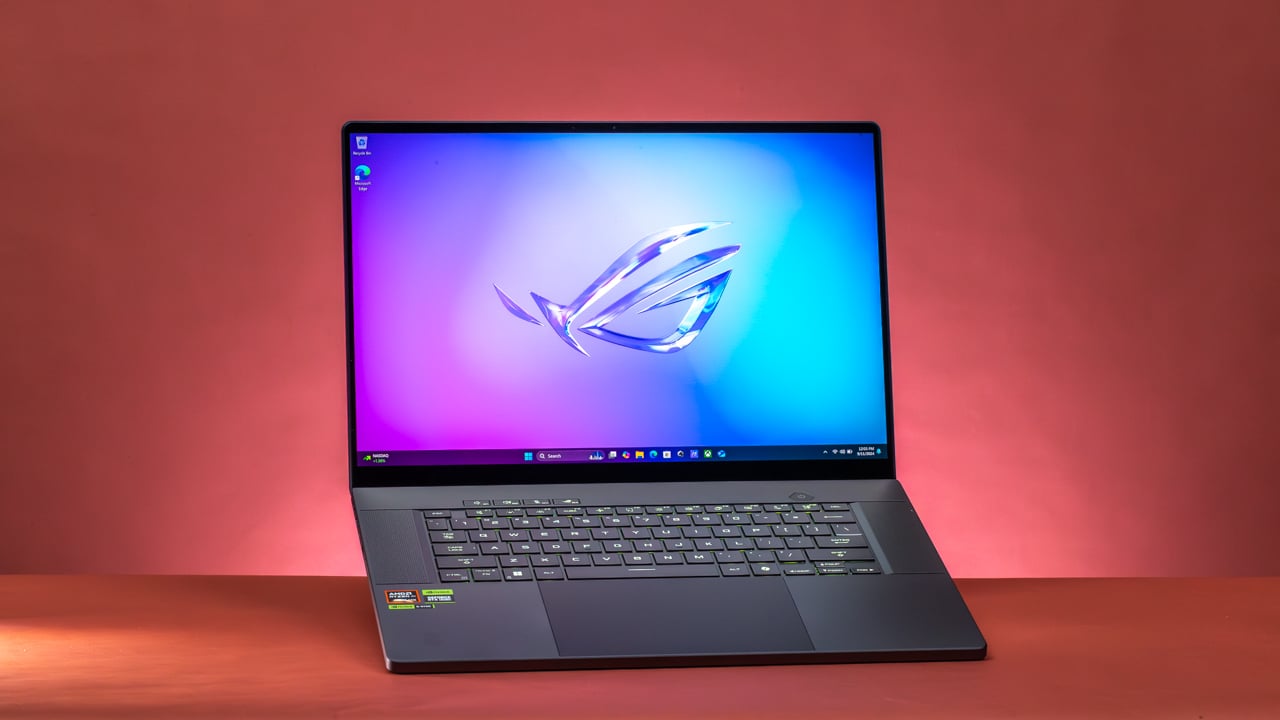
Is the ROG Zephyrus G16 Worth Buying in 2025? A Comprehensive Future-Proofing Analysis
The technological landscape evolves at a breathtaking pace, making the decision to invest in high-performance hardware a constant gamble against obsolescence. When a laptop like the ASUS ROG Zephyrus G16, renowned for its sleek design, potent performance, and stunning display, hits the market, it often represents the pinnacle of current-generation engineering. But what about its longevity? Will the Zephyrus G16, a formidable machine today, still be a worthwhile purchase in the distant-sounding year of 2025?
This extensive article delves into a comprehensive analysis of the ROG Zephyrus G16’s prospects, weighing its current strengths against the anticipated technological advancements and market demands of 2025. We will explore the projected evolution of CPUs, GPUs, memory, storage, connectivity, and software, to determine if this premium gaming and creator laptop can truly stand the test of time.
The ASUS ROG Zephyrus G16: A 2024 Retrospective
Before we peer into the future, let’s establish a baseline by appreciating what the ROG Zephyrus G16 (referring primarily to the 2024 model with Intel Core Ultra processors and NVIDIA RTX 40-series GPUs) brings to the table upon its release.
Key Strengths (as of 2024):
- Processor Power: Equipped with Intel’s Core Ultra series (e.g., Core Ultra 9 185H), the G16 offers a hybrid architecture with performance cores, efficiency cores, and a dedicated Neural Processing Unit (NPU). This delivers exceptional multi-core performance for productivity, gaming, and content creation, alongside a nascent capability for AI-accelerated tasks.
- Graphics Prowess: Depending on the configuration, the G16 can feature up to an NVIDIA GeForce RTX 4090 Laptop GPU. This provides cutting-edge ray tracing capabilities, high frame rates in demanding titles at 1440p and even 4K (with DLSS), and robust acceleration for creative applications like video editing and 3D rendering.
- Stunning Display: A hallmark of the G16 is its high-refresh-rate OLED panel. With resolutions typically around 2.5K (2560×1600 or 2560×1440), incredibly deep blacks, vibrant colors (100% DCI-P3), and response times as low as 0.2ms, it offers an immersive visual experience for both gaming and professional work.
- Sleek and Portable Design: Unlike many bulky gaming laptops, the G16 boasts a remarkably thin and light chassis, often under 2kg and around 1.5cm thick. Its premium aluminum build, minimalist aesthetic, and robust cooling system packed into such a form factor make it a highly desirable machine for users on the go.
- Connectivity and Features: Modern Wi-Fi 6E/7, Thunderbolt 4, ample USB ports, and a high-quality keyboard and trackpad round out a comprehensive feature set.
- Battery Life: Thanks to the efficiency of the Core Ultra processors and a generous battery capacity, the G16 often delivers respectable battery life for a gaming laptop, making it practical for non-gaming tasks away from an outlet.
Potential Weaknesses (as of 2024, or considerations for the future):
- Thermal Management: While impressive for its size, sustained heavy loads can still push thermal limits, potentially leading to minor throttling in the most extreme scenarios.
- Price Point: As a premium device, the G16 commands a high price, which is a significant factor when considering future value.
- Repairability/Upgradability: Like most thin and light laptops, user upgradability is often limited to storage and sometimes RAM, with the CPU and GPU soldered.
The Technological Landscape of 2025: What to Expect
To truly assess the G16’s future viability, we must forecast the significant shifts expected in the technology world by 2025.
1. Processors (CPUs)
- Intel: By 2025, Intel is expected to be well into its "Arrow Lake" and potentially "Lunar Lake" or even "Nova Lake" generations for mobile. These will represent significant advancements over the Core Ultra series.
- IPC Gains: Expect substantial improvements in instructions per cycle (IPC), leading to faster single-core and multi-core performance even at similar clock speeds.
- NPU Evolution: The NPU, nascent in Core Ultra, will become far more powerful and integrated. AI acceleration will be a cornerstone, not just a feature, with dramatically increased TOPS (Trillions of Operations Per Second) for on-device AI tasks, impacting everything from OS features to content creation and even gaming.
- Efficiency: Further optimization of power consumption will lead to better battery life for comparable performance.
- AMD: AMD’s Zen 5 and potentially Zen 5.5/6 architectures will also be prominent.
- Similar Gains: Expect similar leaps in IPC, core counts, and integrated graphics performance.
- Ryzen AI: AMD’s Ryzen AI NPUs will also see significant advancements, competing directly with Intel in the AI acceleration space.
Impact on G16: The G16’s Core Ultra CPU, while excellent today, will be two generations behind by 2025. While still powerful for most tasks, it will lag significantly in raw computational speed and, more crucially, in dedicated AI processing capabilities compared to 2025’s cutting-edge silicon.
2. Graphics Cards (GPUs)
- NVIDIA: NVIDIA’s RTX 5000 series (codenamed "Blackwell" or "Rubin") is expected to dominate by 2025.
- Generational Leap: These GPUs are projected to offer substantial performance increases, particularly in ray tracing, rasterization, and AI-driven features like DLSS (Deep Learning Super Sampling).
- VRAM: Expect higher VRAM capacities to become standard, especially for higher-tier cards, accommodating the ever-growing texture sizes and demands of future games and creative applications.
- DLSS Evolution: DLSS will continue to mature, potentially offering even greater image quality and performance boosts, further extending the life of older GPUs but also making newer ones even more potent.
- AMD: AMD’s RDNA 4 and RDNA 5 architectures will also be competing, bringing their own advancements in ray tracing and FSR (FidelityFX Super Resolution).
Impact on G16: An RTX 4080 or RTX 4090 in the G16 will still be a highly capable GPU in 2025. It will likely handle most new games at 1440p with high settings, especially with the help of DLSS. However, it will no longer be "top-tier." Max settings at high frame rates in the most demanding 2025 titles, especially with next-gen ray tracing, might require compromises. The gap in raw performance and specialized RT cores will be noticeable against the RTX 5000 series. For creative work, the VRAM and raw compute will still be strong but potentially outpaced by newer cards designed for future AI-accelerated workflows.
3. Memory and Storage
- RAM: DDR5-6400 or even DDR5-7200 will likely become standard for high-performance laptops. The G16’s DDR5-5600/6000 will still be fast but not cutting-edge. The amount (32GB+) will remain crucial.
- Storage: PCIe Gen 5 NVMe SSDs will be common, offering sequential read/write speeds significantly faster than the Gen 4 drives found in the G16.
Impact on G16: While faster RAM and storage improve load times and responsiveness, the G16’s existing components are already very fast. The difference in real-world perceived performance for most tasks might be less dramatic than CPU/GPU shifts, but for extremely large file transfers or specific professional workflows, newer machines will have an edge.
4. Connectivity
- Wi-Fi 7: Expected to be standard, offering even lower latency and higher bandwidth than Wi-Fi 6E/7 found in the G16.
- Thunderbolt 5/USB4 v2: These new standards will offer double the bandwidth of Thunderbolt 4 (up to 80 Gbps, burst to 120 Gbps), enabling faster external storage, multi-display setups, and more versatile docking solutions.
Impact on G16: The G16’s Wi-Fi 6E/7 and Thunderbolt 4 are still excellent. While not the absolute latest, they will remain perfectly functional for the vast majority of users in 2025. Only those with bleeding-edge peripherals or networking infrastructure would notice a significant difference.
5. Displays
- Mini-LED/OLED Dominance: High-quality, high-refresh-rate Mini-LED and OLED panels will be even more widespread, potentially at higher resolutions (e.g., 4K OLED) becoming more common even in gaming laptops.
- HDR Refinement: HDR standards will continue to improve, with even higher peak brightness and more granular local dimming zones.
Impact on G16: The G16’s OLED panel is one of its strongest selling points. Its quality, refresh rate, and response time will remain exceptional even in 2025. This component will age gracefully and continue to provide a premium visual experience that rivals or even surpasses many newer machines’ displays.
Performance Assessment: G16 vs. 2025 Standards
Let’s break down how the G16’s performance will likely hold up across different use cases in 2025.
1. Gaming
- Current State: The G16 (especially with RTX 4080/4090) is a 1440p gaming beast, often hitting high frame rates on max settings, with ray tracing enabled in many titles.
- 2025 Outlook:
- Newer Games: Future AAA titles will be designed with RTX 5000 series GPUs in mind, likely pushing graphical fidelity even further. Expect more demanding ray tracing implementations and higher minimum VRAM requirements.
- Resolution: The G16 will still excel at 1440p, but max settings with ray tracing might become challenging, requiring users to drop settings to "high" or "medium," or rely more heavily on DLSS/FSR.
- Competitive Gaming: For competitive esports titles, the G16 will remain more than capable of delivering high frame rates, as these games are generally less graphically intensive.
- Longevity: The G16’s GPU will likely age similarly to how an RTX 3080/3080 Ti performs today – still very good, but no longer the top dog.
2. Content Creation (Video Editing, 3D Rendering, Graphic Design)
- Current State: The G16 is an excellent machine for creators, leveraging its powerful CPU, ample RAM, and high-end GPU for fast renders, smooth playback, and efficient workflow.
- 2025 Outlook:
- CPU/GPU Compute: The raw CPU and GPU power will still be very respectable for most tasks. Complex 4K video editing, large 3D scenes, and intricate graphic design will remain feasible.
- AI Acceleration: This is where the G16 will show its age. Many creative applications (e.g., Adobe Photoshop, Premiere Pro, Blender) are increasingly integrating AI features for tasks like denoising, upscaling, content generation, and intelligent automation. The G16’s NPU, while present, will be significantly less powerful than the next-gen NPUs and AI-optimized GPUs of 2025, leading to slower performance or even an inability to run some future AI-specific features efficiently.
- VRAM: For very large 3D models or high-resolution video projects, the VRAM of even an RTX 4090 (16GB) might start to feel less generous compared to future professional-grade GPUs.
3. General Productivity and Everyday Use
- Current State: The G16 is massive overkill for web browsing, office suites, and light multitasking.
- 2025 Outlook: It will remain exceptionally fast and responsive for these tasks. This is the area where high-end hardware ages the most gracefully. The premium keyboard, trackpad, and display will continue to provide an excellent user experience.
Non-Performance Factors in 2025
Beyond raw power, several other aspects contribute to a laptop’s "worth."
1. Design and Build Quality
The G16’s premium aluminum chassis, minimalist aesthetic, and robust construction are timeless. It will still look and feel like a high-end laptop in 2025. The durability means it should withstand regular use.
2. Display Quality
As mentioned, the OLED panel is a major asset. Its visual fidelity will remain top-tier, ensuring that any content displayed looks fantastic. This is a component that does not quickly become obsolete.
3. Battery Life
While excellent for a gaming laptop today, battery degradation over time is inevitable. By 2025, expect the G16’s battery capacity to have diminished slightly. Furthermore, newer laptops will likely achieve even better efficiency due to architectural advancements, making the G16’s battery life less competitive.
4. Cooling System
The G16’s intelligent cooling solution is designed for its current components. While robust, it won’t magically handle the heat generated by hypothetically upgrading to 2025-level components (which isn’t possible anyway). It will continue to cool its existing hardware effectively, ensuring consistent performance within its limits.
5. Software Support and Drivers
ASUS typically provides good driver and BIOS support for several years. Windows updates will continue to roll out, and NVIDIA will continue to release Game Ready drivers for the RTX 40 series. Compatibility with new software shouldn’t be an issue for the foreseeable future.
6. Price (The Ultimate Determinant)
This is the most crucial factor. A laptop’s "worth" is always relative to its price.
- New G16 in 2024: High premium.
- New G16 in 2025 (if still sold): Likely heavily discounted to clear inventory, but still potentially competing with entry-to-mid-range 2025 models.
- Used G16 in 2025: This is the most likely scenario. A significantly reduced price will be its primary appeal.
Who Should Consider the G16 in 2025?
The Zephyrus G16 could still be a worthwhile purchase in 2025 for specific user profiles, provided the price is right.
- Budget-Conscious Gamers/Creators: If available at a substantial discount (e.g., 40-60% off its original MSRP), the G16 will offer exceptional value. For those who can’t afford a brand-new 2025 flagship but still want premium gaming and creative performance, a used G16 will be a compelling option.
- Casual to Enthusiast Gamers: If your primary gaming is at 1440p and you’re content with high (not necessarily "ultra") settings in future AAA titles, the G16 will still deliver an excellent experience. DLSS will be your friend.
- Content Creators with Moderate AI Needs: For traditional video editing, graphic design, and 3D modeling where AI integration is not yet paramount to your workflow, the G16 will remain a very capable machine.
- Users Prioritizing Design and Display: If a sleek, portable design and a stunning OLED display are higher priorities than having the absolute latest raw performance or AI features, the G16 will continue to impress.
- Students or Professionals Needing a Powerful All-Rounder: For a student needing power for engineering software or a professional who occasionally games, the G16’s blend of performance, portability, and excellent display makes it a strong contender if acquired at a good price.
Who Should Look Elsewhere?
Conversely, there are strong reasons why some users should avoid the G16 in 2025.
- Hardcore Competitive Gamers: If you demand the absolute highest frame rates in competitive titles or want to max out every setting in every new AAA game at the highest resolutions, 2025’s dedicated gaming laptops with RTX 5000 series GPUs will offer a noticeable advantage.
- Professionals Heavily Reliant on AI/ML: For researchers, developers, or creators whose workflows are deeply intertwined with cutting-edge AI acceleration (e.g., generative AI, complex machine learning models), the G16’s NPU and GPU will be significantly outclassed by newer hardware specifically designed for these tasks.
- Early Adopters and "Bleeding Edge" Enthusiasts: If you always want the latest and greatest technology, the G16 will simply not satisfy that craving.
- Those Seeking Maximum Future-Proofing: While no laptop is truly future-proof, buying a two-year-old model means you’re starting further down the obsolescence curve. A 2025 laptop will inherently have a longer "useful life" before its performance becomes genuinely limiting.
Key Considerations Before Buying in 2025
If you find yourself in the "should consider" category, here are crucial factors to evaluate:
- The Price: This cannot be stressed enough. A "worthwhile" purchase is entirely dependent on the deal you can get. If a new entry-level 2025 gaming laptop offers similar (or better) performance for a similar price, the G16’s appeal diminishes. Look for significant discounts (e.g., 40% or more off original MSRP).
- Specific Configuration: An RTX 4070-equipped G16 will age faster than an RTX 4080 or 4090 model. Aim for the highest-end GPU configuration you can afford within your budget. Ensure it has at least 32GB of RAM.
- Condition (if used): Check battery health, screen condition (no burn-in for OLED), keyboard wear, and overall chassis integrity.
- Warranty: Does it come with any remaining warranty? This provides peace of mind.
- Your Actual Needs: Be brutally honest about what you’ll use the laptop for. Don’t buy an RTX 4090 if you only play Minecraft and browse the web.
Conclusion
The ASUS ROG Zephyrus G16, as a 2024 model, is an exceptional piece of hardware. Its elegant design, vibrant OLED display, and powerful CPU/GPU combination make it a premium choice for gamers and creators alike. However, the relentless march of technology means that by 2025, it will no longer be at the forefront of performance.
Is it worth buying in 2025? The answer is a resounding "it depends."
It will not be a leading-edge machine, especially in areas like dedicated AI acceleration and raw graphics power compared to the next generation of components. For users who demand the absolute peak of performance, particularly for AI-intensive tasks or uncompromised 4K gaming, newer 2025 models will be superior.
However, for a discerning buyer looking for a premium experience at a significantly reduced price, the Zephyrus G16 could represent outstanding value in 2025. Its stunning display, solid build quality, excellent portability, and still-formidable gaming and content creation capabilities (especially with DLSS) will ensure it remains a highly enjoyable and productive machine for many years to come.
Ultimately, the Zephyrus G16 in 2025 will transition from being a flagship to a highly capable, value-oriented option. Its worth will be measured not by its ability to lead the pack, but by its enduring quality and the sheer performance it can still deliver for its likely discounted price. If you can snag one at a great deal, and your needs align with its continued strengths, the ROG Zephyrus G16 could indeed be a very smart purchase.
