The Future of Portable Power: A Deep Dive into the ASUS ROG Zephyrus G16 (2025) – A Detailed Review
The year is 2025, and the world of portable computing is undergoing a profound transformation. As AI integration becomes ubiquitous and demanding creative workflows blend seamlessly with high-fidelity gaming, the need for a laptop that excels in both power and portability has never been greater. Enter the ASUS ROG Zephyrus G16 (2025), a machine that doesn’t just meet these evolving demands but sets a new benchmark for what a thin-and-light gaming and creator laptop can truly achieve.
Building upon a legacy of innovation, the 2025 Zephyrus G16 refines every aspect of its acclaimed predecessors, offering a holistic package that blends cutting-edge performance with an elegantly understated design. This isn’t just an incremental update; it’s a statement of intent from ASUS ROG, signaling a future where compromise is a relic of the past.
Design and Build Quality: A Masterclass in Subtlety and Strength
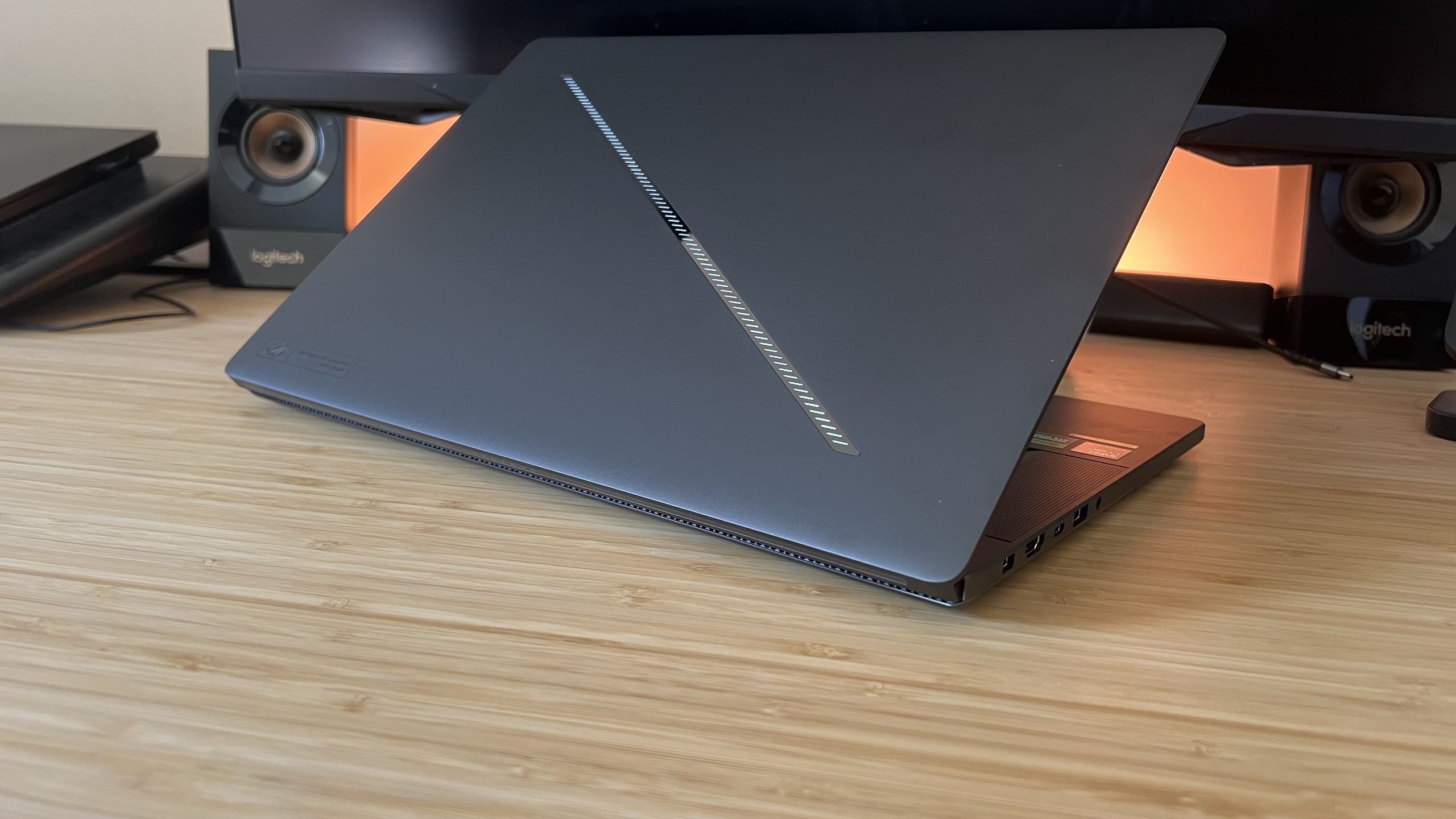
ASUS has long perfected the art of the minimalist gaming aesthetic, and the Zephyrus G16 (2025) is the pinnacle of this philosophy. Gone are the aggressive angles and overt RGB of yesteryear; instead, we are presented with a sleek, sophisticated chassis crafted from a premium CNC-milled aluminum and magnesium alloy. The result is a device that feels incredibly robust yet remarkably lightweight, tipping the scales at an astonishingly svelte 1.85 kg (approximately 4.08 lbs) and measuring a mere 1.49 cm (0.59 inches) at its thickest point.
The lid features a subtle, refined interpretation of the iconic slash design, now incorporating an even more intricate AniMe Matrix display 2.0. This updated version boasts higher pixel density and greater customization options, allowing users to express their personality with animations, system information, or custom text – a touch of flair that can be toggled off for professional environments. The hinge mechanism has been further refined, offering a silky-smooth opening action that allows for a true one-handed lift, while also providing excellent stability with minimal screen wobble, even during intense gaming sessions.
The overall finish is a matte black (or a newly introduced "Lunar Silver") that resists fingerprints surprisingly well, maintaining its pristine appearance throughout daily use. The chassis rigidity is exceptional, with virtually no flex in the keyboard deck or lid, instilling confidence in its durability. ASUS has truly elevated the Zephyrus G16 from a gaming laptop to a premium lifestyle device, equally at home in a boardroom as it is at an esports tournament.
The Visual Spectacle: A Display Beyond Compare
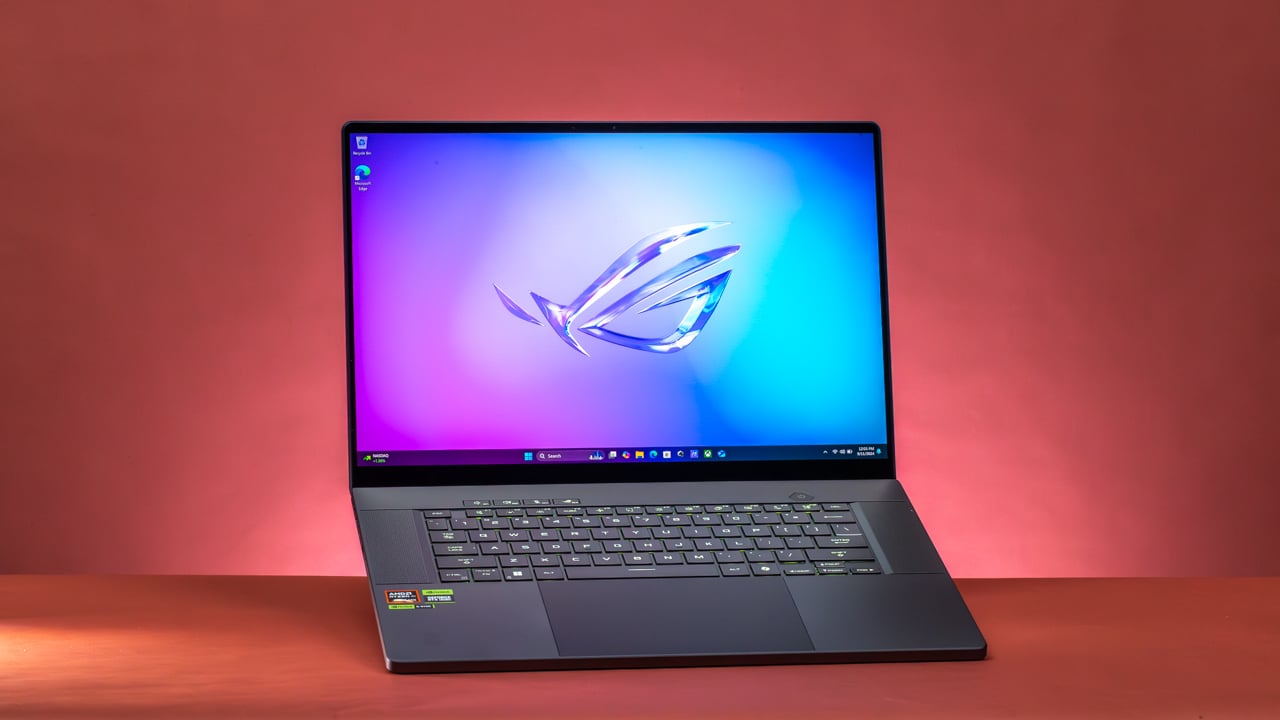
The display is arguably the most captivating feature of the Zephyrus G16 (2025), and ASUS has spared no expense in delivering a truly breathtaking visual experience. The 16-inch panel is a custom-engineered ROG Nebula HDR OLED, a technological marvel that pushes the boundaries of laptop screen quality.
Boasting a stunning 2.5K (2560 x 1600) resolution, every pixel is rendered with incredible clarity and precision. The OLED technology ensures true blacks and an infinite contrast ratio, making colors pop with unparalleled vibrancy and depth. HDR content comes alive with an peak brightness of 1100 nits and VESA DisplayHDR True Black 600 certification, delivering breathtaking highlights and shadow detail that immerse you completely in your content.
But it’s not just about pretty pictures. For gamers, the panel offers a blistering 280Hz refresh rate combined with an astonishing 0.2ms response time, virtually eliminating ghosting and motion blur. This ultra-fast response, coupled with NVIDIA G-SYNC compatibility, provides an incredibly fluid and tear-free gaming experience that can give competitive players a tangible edge.
Color accuracy is paramount for content creators, and the G16’s display doesn’t disappoint, covering 100% of the DCI-P3 color gamut with factory calibration and Delta E < 1 accuracy. This means professional-grade color reproduction right out of the box, crucial for video editing, graphic design, and photography. The anti-glare coating is also highly effective, minimizing reflections without sacrificing clarity or sharpness, further enhancing its usability in varied lighting conditions.
Uncompromising Performance: The Heart of the Beast
Underneath its elegant exterior, the Zephyrus G16 (2025) houses a formidable array of components designed to tackle the most demanding tasks with ease. ASUS has integrated the very latest in CPU and GPU technology, augmented by advanced memory and storage solutions.
Processor: The 2025 model is powered by the next-generation Intel Core Ultra 9 298HX processor (or AMD Ryzen 9 9980HX, depending on configuration). This "Arrow Lake-HX" (or "Zen 5+" for AMD) CPU features a hybrid architecture with an unprecedented number of performance and efficiency cores, delivering exceptional multi-threaded performance for complex rendering, video encoding, and heavy multitasking. Crucially, it incorporates a significantly enhanced Neural Processing Unit (NPU) that offers over 100+ TOPS (Tera Operations Per Second) of dedicated AI processing power. This NPU offloads AI workloads from the CPU and GPU, dramatically accelerating tasks like real-time language translation, advanced image upscaling, generative AI applications, and intelligent power management, making the G16 a true AI PC.
Graphics: For graphics prowess, the Zephyrus G16 (2025) offers up to an NVIDIA GeForce RTX 5080 Laptop GPU, based on the groundbreaking "Blackwell" architecture (or AMD Radeon RX 8900M XT). This next-generation GPU boasts substantially increased CUDA cores, RT Cores, and Tensor Cores compared to its predecessors, alongside a generous 16GB of GDDR7 VRAM. With a configurable TGP (Total Graphics Power) peaking at 140W with Dynamic Boost, the RTX 5080 delivers unparalleled gaming performance, effortlessly handling the latest AAA titles at 2.5K resolution with maxed-out settings and full ray tracing, often exceeding 90+ FPS, thanks to NVIDIA’s new DLSS 5.0 upscaling technology. Content creators will benefit immensely from the raw rendering power for complex 3D scenes, real-time video effects, and accelerated AI model training.
Memory and Storage: The G16 (2025) is equipped with up to 64GB of lightning-fast DDR5-6800MHz RAM, ensuring seamless multitasking and robust performance for memory-intensive applications. Storage is equally impressive, featuring a PCIe Gen 5 NVMe SSD with capacities up to 4TB. This next-gen SSD delivers sequential read/write speeds that can exceed 14,000 MB/s, drastically reducing loading times for games and applications, and accelerating file transfers for large media projects. There’s also a secondary M.2 slot for future storage expansion, a welcome addition for power users.
Advanced Cooling System: Sustained Performance Without Compromise
Maintaining peak performance in such a thin chassis is a monumental engineering challenge, but ASUS ROG has once again proven its thermal expertise. The Zephyrus G16 (2025) features a comprehensively redesigned cooling system, aptly named "ROG Intelligent Cooling 3.0."
This system incorporates a full-width vapor chamber that covers both the CPU and GPU, providing vastly superior heat dissipation compared to traditional heat pipes. This is complemented by ASUS’s patented Conductonaut Extreme liquid metal thermal compound applied to both the CPU and GPU, significantly lowering core temperatures and allowing for higher boost clocks for longer durations.
The Arc Flow Fans 3.0, now with a refined design featuring even more blades and a variable thickness, push up to 20% more air volume at lower RPMs, resulting in quieter operation under moderate loads. An intricate network of ultra-thin copper fins and strategically placed exhaust vents ensures efficient heat expulsion. Multiple thermal sensors across the motherboard intelligently adjust fan speeds and power targets, optimizing performance while minimizing acoustic output.
In "Turbo" mode, the fans can get noticeable, but the resulting performance uplift is undeniable. For quieter operation during less demanding tasks, the "Silent" mode offers near-inaudible fan noise, showcasing the system’s versatility. This advanced cooling allows the Zephyrus G16 to sustain its peak performance even during extended gaming sessions or intensive rendering tasks, a critical factor for professional users and hardcore gamers alike.
Keyboard and Touchpad: Precision and Comfort
The input devices on a laptop designed for both gaming and productivity are crucial, and the Zephyrus G16 (2025) delivers an excellent experience. The keyboard features a refined layout with slightly larger keycaps and an impressive 1.7mm of key travel, offering a satisfyingly tactile and responsive typing experience. The keys are well-spaced, and the subtle dish-shaped keycaps cradle the fingertips, reducing fatigue during long typing sessions.
Per-key RGB backlighting, customizable via Armoury Crate, adds a touch of flair and ensures visibility in any lighting condition. The anti-ghosting technology ensures every keystroke is registered accurately, even during rapid input in fast-paced games. The dedicated media keys and programmable function row further enhance usability.
Below the keyboard lies an expansive glass touchpad, approximately 18% larger than its predecessor. It boasts an incredibly smooth surface, offering precise tracking and excellent palm rejection. The integrated haptic feedback motor provides a satisfying click, mimicking the feel of discrete buttons while maintaining a seamless surface. Multi-finger gestures are recognized flawlessly, making navigation and productivity tasks a breeze.
Audio Experience: Immersive Soundscapes
ASUS has paid significant attention to the audio capabilities of the Zephyrus G16 (2025). The laptop features a robust 6-speaker system (two tweeters and four force-canceling woofers) strategically placed to deliver a rich, detailed, and surprisingly powerful soundstage for a laptop of this size.
Dolby Atmos support further enhances the audio, creating a spatial sound experience that immerses users in games and movies. Dialog is clear, music has depth, and explosions pack a punch without distortion, even at higher volumes. The integrated Smart Amp technology intelligently monitors speaker output, preventing damage and improving overall sound quality.
For communication, the G16 comes with a high-fidelity 3D array microphone system that employs AI-powered two-way noise cancellation. This technology effectively filters out background noise for both incoming and outgoing audio, ensuring crystal-clear voice communication during online gaming, video conferences, or streaming.
Connectivity and Ports: Comprehensive and Future-Proof
The Zephyrus G16 (2025) offers a comprehensive selection of ports, balancing modern connectivity with essential legacy options.
On the left side, you’ll find a Thunderbolt 5 port (USB4 v2 compatible) with DisplayPort 2.1 and Power Delivery 3.0, capable of supporting up to 140W charging and external GPUs. Alongside it is a USB 3.2 Gen 2 Type-A port, an HDMI 2.1b port for high-refresh-rate external monitors, and a 3.5mm combo audio jack.
The right side features another USB 3.2 Gen 2 Type-A port, a USB 3.2 Gen 2 Type-C port (with DisplayPort and Power Delivery), and crucially for creators, a full-sized SD Card Reader (UHS-II compatible), offering blazing-fast transfer speeds for camera media.
Wireless connectivity is handled by the latest Wi-Fi 7 (802.11be) standard, providing significantly faster speeds, lower latency, and improved reliability compared to Wi-Fi 6E, especially in crowded network environments. Bluetooth 5.4 ensures robust connections with peripherals and audio devices.
Battery Life and Charging: Power On The Go
Despite its immense power, the Zephyrus G16 (2025) manages to deliver impressive battery life, thanks to a large 90Whr battery and the power efficiency of the new Intel Core Ultra/AMD Ryzen processors and NVIDIA RTX 5000 series GPUs.
In light productivity tasks, web browsing, and video playback, users can expect to comfortably achieve 9-10 hours of runtime, making it a viable companion for a full day’s work or classes without needing a charger. For more demanding tasks, battery life will naturally decrease, but the inclusion of USB-C Power Delivery up to 140W allows for convenient charging on the go with a wide range of adapters. The included 240W slim charging brick rapidly recharges the battery, reaching 50% in approximately 30 minutes.
Software and Features: Intelligent Integration
ASUS’s Armoury Crate software remains the central hub for system control, but in 2025, it’s more refined and AI-integrated than ever before. It offers granular control over performance profiles, fan speeds, RGB lighting, and display settings. The AI-driven optimization now intelligently learns user habits, proactively adjusting power limits and fan curves for optimal performance and acoustics based on the applications being used.
Windows 11, with its deeper Copilot integration, leverages the G16’s powerful NPU for a truly intelligent operating system experience. Features like advanced photo editing with AI filters, real-time voice transcription, and smart search are incredibly fast and efficient.
The integrated 1080p IR webcam with Windows Hello facial recognition provides secure and convenient login. The webcam itself offers excellent image quality for video calls, further enhanced by AI-powered features like background blur, eye contact correction, and automatic framing, making it ideal for remote work and streaming.
Upgradeability: Limited but Functional
Like most thin-and-light laptops, upgradeability on the Zephyrus G16 (2025) is somewhat limited but still practical for key components. The device typically comes with one SO-DIMM slot for RAM, allowing users to upgrade or expand memory, while a portion is often soldered to the motherboard. The two M.2 NVMe SSD slots are easily accessible for storage expansion, which is crucial given the ever-increasing size of games and creative assets. Users comfortable with opening the chassis will find these upgrades relatively straightforward.
The Verdict: A Glimpse into the Future of Premium Laptops
The ASUS ROG Zephyrus G16 (2025) is more than just a laptop; it’s a testament to ASUS’s vision for the future of portable computing. It masterfully blends cutting-edge performance, an absolutely stunning display, a sophisticated design, and intelligent AI integration into a package that is remarkably thin and light.
Pros:
- Unparalleled Performance: Next-gen CPU/GPU combo with powerful NPU for AI.
- Stunning ROG Nebula HDR OLED Display: 2.5K, 280Hz, 0.2ms, true blacks, 1100 nits HDR, G-SYNC.
- Premium Design & Build Quality: CNC-milled aluminum, lightweight, robust, sophisticated aesthetic.
- Advanced Cooling: Vapor chamber, liquid metal, Arc Flow Fans 3.0 for sustained performance.
- Excellent Keyboard & Touchpad: Comfortable typing, precise tracking, haptic feedback.
- Comprehensive Connectivity: Thunderbolt 5, Wi-Fi 7, full-sized SD card reader.
- Immersive Audio: 6-speaker system with Dolby Atmos and AI noise cancellation.
- Strong Battery Life: Impressive endurance for its power class.
- Intelligent Software Integration: AI-enhanced Armoury Crate and Windows Copilot.
Cons:
- Premium Price: Cutting-edge technology comes at a cost, making it an investment.
- Fan Noise Under Extreme Load: While excellent, sustained maximum performance will still generate audible fan noise.
- Limited RAM Upgradeability: One soldered, one slot approach is common but limits full flexibility.
The Zephyrus G16 (2025) is undeniably a premium product, and its price tag will reflect that. However, for the discerning user who demands the absolute best – a gamer seeking competitive advantage, a content creator requiring raw power on the go, or a professional who needs a stylish and capable machine that can handle anything thrown its way – the G16 represents an exceptional value proposition. It’s a machine that doesn’t just meet the demands of 2025 but confidently sets the standard for years to come. ASUS ROG has not just created a laptop; they’ve crafted an experience, a true masterpiece of engineering and design that will redefine expectations for the portable PC.