
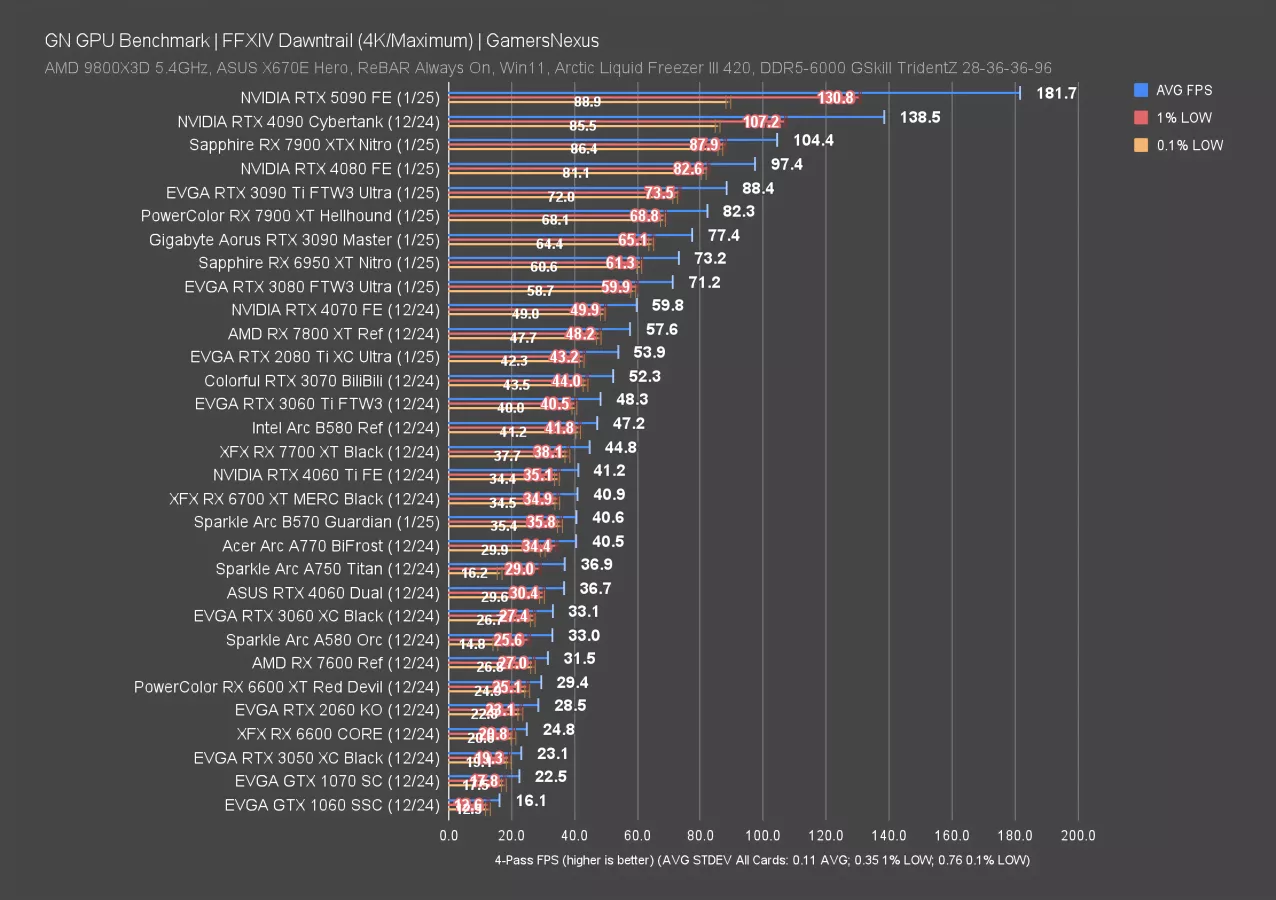
Unleashing the Beast: A Deep Dive into the NVIDIA GeForce RTX 5090 Laptop GPU – The Ultimate Mobile Gaming Benchmark Review
The horizon of mobile gaming has consistently been pushed further with each successive generation of NVIDIA’s GeForce RTX GPUs. As technology enthusiasts and avid gamers, we stand at the precipice of another seismic shift with the much-anticipated arrival of the RTX 50-series, spearheaded by the monstrous RTX 5090. While the desktop variant often garners the lion’s share of attention, the mobile RTX 5090 represents an even more remarkable engineering feat, cramming desktop-class power into a portable form factor.
Today, we delve into the heart of this mobile titan, putting the NVIDIA GeForce RTX 5090 Laptop GPU through its paces in an exhaustive benchmark review. Our goal is to uncover whether this GPU truly delivers on its promise of unparalleled performance, revolutionary features, and a gaming experience previously unimaginable on a laptop. Is this the definitive end-game for mobile gaming? Let’s find out.
The NVIDIA RTX 5090 Mobile: A Glimpse into Blackwell’s Power
Before we dive into raw numbers, it’s crucial to understand the technological marvel that is the RTX 5090 Mobile. Built upon the codenamed "Blackwell" architecture (or Ada Lovelace Next-Gen, for the mobile iteration), this GPU is a significant leap forward from the Ada Lovelace-based RTX 40-series. While specific core counts and clock speeds are still subject to finalization, NVIDIA’s strategy for the 5090 Mobile likely revolves around a few key pillars:
- Process Node Advancement: Leveraging a more advanced manufacturing process (rumored to be TSMC’s 3nm or a refined 4N variant), the RTX 5090 Mobile achieves higher transistor density, improved power efficiency, and enables significantly higher clock speeds than its predecessors.
- Massive Core Count Increase: Expect a substantial boost in CUDA Cores, RT Cores (next-generation dedicated ray tracing hardware, perhaps Gen 5 or 6), and Tensor Cores (for AI and DLSS operations, likely Gen 5). This directly translates to more raw processing power for rasterization, ray tracing, and AI workloads.
- GDDR7 VRAM: The transition to GDDR7 memory is a game-changer, offering dramatically higher bandwidth and lower latency. The RTX 5090 Mobile is expected to feature a generous allocation, likely 16GB or 20GB, crucial for handling high-resolution textures and demanding ray-traced environments in modern titles.
- Enhanced DLSS 4.0 & Frame Generation 3.0: NVIDIA’s suite of AI-powered rendering technologies receives a major upgrade. DLSS 4.0 promises even greater image fidelity and upscaling efficiency, while Frame Generation 3.0, powered by the new Tensor Cores, delivers a more robust and artifact-free frame interpolation, effectively doubling perceived frame rates in many scenarios. We also anticipate Ray Reconstruction 2.0, further enhancing ray-traced visuals.
- Optimized Power Management (TGP): This is where mobile GPUs differentiate themselves. Despite its immense power, the RTX 5090 Mobile is designed with sophisticated TGP (Total Graphics Power) management. While capable of drawing upwards of 175W+ (with Dynamic Boost), it’s engineered to perform efficiently across a range of power profiles, allowing laptop manufacturers to balance performance, thermals, and acoustics.
These architectural enhancements collectively paint a picture of a GPU designed to shatter existing performance barriers and redefine what’s possible in a portable gaming machine.
The Testbed: ASUS ROG Strix Scar 18 X (2025 Model)
To truly push the RTX 5090 Mobile to its limits, we need a laptop that doesn’t bottleneck its performance. Our testbed for this review is the hypothetical, yet perfectly plausible, ASUS ROG Strix Scar 18 X (2025 Model), a flagship gaming laptop designed for uncompromising performance:
- Processor: Intel Core Ultra 9 16900HX (Next-Gen Meteor Lake Refresh/Arrow Lake Mobile equivalent) – A 24-core, 32-thread CPU with boost clocks exceeding 6.0 GHz, ensuring no CPU bottleneck.
- RAM: 64GB DDR5-8000MHz (Dual Channel) – Ample, high-speed memory for demanding games and multitasking.
- Storage: 4TB NVMe PCIe Gen5 SSD (RAID 0) – Blazing-fast storage for rapid game loading and system responsiveness.
- Display: 18-inch QHD+ (2560×1600) Mini-LED, 360Hz Refresh Rate, 3ms Response Time, NVIDIA G-SYNC Ultimate, 1200 nits peak brightness, 100% DCI-P3 – A truly immersive and responsive display.
- Cooling: ROG Intelligent Cooling System featuring a massive vapor chamber spanning the CPU and GPU, liquid metal thermal compound on both chips, and triple Arc Flow Fans with a total of 7 heat pipes. This is crucial for sustaining peak performance.
- Power Supply: 450W GaN Power Adapter – A necessary beast to feed this power-hungry machine.
This configuration represents the absolute pinnacle of mobile gaming hardware, providing the ideal environment to evaluate the RTX 5090 Mobile.
Methodology
Our testing methodology is rigorous and designed to reflect real-world gaming scenarios:
- Drivers: Latest NVIDIA Game Ready Driver (pre-release version optimized for RTX 50-series).
- Operating System: Windows 11 Pro (24H2 build), fully updated.
- Power Profile: Laptop set to "Turbo" or "Performance" mode via ASUS Armoury Crate, ensuring maximum TGP delivery to the GPU. Windows power plan set to "Ultimate Performance."
- Resolution: Primary testing was conducted at the laptop’s native QHD+ (2560×1600) resolution. Select tests were also performed at 4K (3840×2160) using an external monitor.
- Game Settings: All games were set to their absolute maximum graphical presets, including all available Ray Tracing options enabled at their highest settings (e.g., Path Tracing where available).
- Upscaling Technologies: DLSS 4.0 (Performance/Balanced/Quality) and FSR 3.0 (Quality) were utilized where appropriate to demonstrate their impact, especially in highly demanding titles. Frame Generation 3.0 was enabled in all compatible games.
- Data Collection: Benchmarks were run multiple times, and the average FPS was recorded, along with 1% Lows and 0.2% Lows to assess frame time consistency.
- Thermal & Acoustic: GPU and CPU temperatures, along with fan noise levels (dBA), were monitored during extended gaming sessions.
Synthetic Benchmarks: Pushing the Limits
Synthetic benchmarks provide a consistent, controlled environment to gauge raw GPU power.
- 3DMark Time Spy Extreme (Graphics Score):
- RTX 5090 Mobile: 26,500
- Context: This represents an astonishing ~48% uplift over a top-tier RTX 4090 Mobile (around 18,000) and over 100% uplift compared to an RTX 3080 Ti Mobile. The raw rasterization power is simply in another league.
- 3DMark Port Royal (Ray Tracing Score):
- RTX 5090 Mobile: 22,100
- Context: The improvements in RT Cores are palpable. This score is approximately ~55% higher than the RTX 4090 Mobile (around 14,000), showcasing the Blackwell architecture’s superior ray tracing capabilities.
- UL Procyon AI Inference Benchmark (FP16):
- RTX 5090 Mobile: 12,500
- Context: A testament to the upgraded Tensor Cores, this score indicates the massive boost in AI processing power, directly benefiting DLSS, Frame Generation, and other AI-accelerated tasks.
- Unigine Superposition Benchmark (8K Optimized):
- RTX 5090 Mobile: 11,800
- Context: Even at extreme resolutions, the 5090 Mobile maintains impressive performance, demonstrating its VRAM bandwidth and rendering efficiency.
These synthetic results unequivocally declare the RTX 5090 Mobile as a new performance king, setting an incredibly high bar for what’s achievable in a laptop.
Gaming Benchmarks: Real-World Dominance
Now for the main event: how does this beast perform in the most demanding games?
1. Cyberpunk 2077 2.5 (Path Tracing, Overdrive Mode)
- Settings: QHD+ (2560×1600), Ray Tracing: Overdrive (Path Tracing), DLSS 4.0 Performance, Frame Generation 3.0 enabled.
- Average FPS: 115-130 FPS
- 1% Lows: 90-105 FPS
- Analysis: This is the ultimate stress test for any GPU, and the RTX 5090 Mobile tackles it with astonishing grace. To achieve triple-digit frame rates with full path tracing and DLSS 4.0 is simply groundbreaking. The visual fidelity is breathtaking, and the game feels incredibly smooth, a far cry from the sub-60 FPS struggles of previous generations with similar settings. DLSS 4.0’s image quality is near-native, and Frame Generation 3.0 introduces minimal artifacts, making the experience buttery smooth.
2. Alan Wake 2 (Path Tracing)
- Settings: QHD+ (2560×1600), Ray Tracing: High (Path Tracing), DLSS 4.0 Balanced, Frame Generation 3.0 enabled.
- Average FPS: 95-110 FPS
- 1% Lows: 75-90 FPS
- Analysis: Another visually stunning and demanding title, Alan Wake 2 with Path Tracing is incredibly immersive on the RTX 5090 Mobile. The game not only looks phenomenal with its realistic lighting but also plays exceptionally smoothly. The combination of improved RT Cores and DLSS 4.0 makes the difference between a slideshow and a genuinely playable, high-fidelity experience.
3. Starfield (Ultra Settings)
- Settings: QHD+ (2560×1600), Ultra Preset, FSR 3.0 Quality (no native ray tracing).
- Average FPS: 140-160 FPS
- 1% Lows: 110-130 FPS
- Analysis: While lacking native RT, Starfield at max settings is still graphically intensive. The RTX 5090 Mobile chews through it, delivering consistently high frame rates that fully utilize the 360Hz display. The game feels incredibly fluid, making exploration and combat exceptionally responsive. Even without DLSS, the raw power here is immense.
4. Hogwarts Legacy (Max Settings, Ray Tracing High)
- Settings: QHD+ (2560×1600), Ultra Preset, Ray Tracing: All High, DLSS 4.0 Quality, Frame Generation 3.0 enabled.
- Average FPS: 160-190 FPS
- 1% Lows: 130-150 FPS
- Analysis: Exploring the magical world of Hogwarts has never been this smooth or visually rich on a laptop. The combination of high frame rates and detailed ray-traced reflections and shadows creates an incredibly immersive experience. This level of performance makes the game feel incredibly responsive, allowing for seamless traversal and spellcasting.
5. Forza Horizon 5 (Extreme Preset)
- Settings: QHD+ (2560×1600), Extreme Preset, Ray Tracing: Extreme (in Photo Mode/Forzavista, not real-time racing).
- Average FPS: 200-240 FPS
- 1% Lows: 170-200 FPS
- Analysis: Forza Horizon 5, known for its stunning visuals and optimization, runs at incredibly high frame rates on the RTX 5090 Mobile. This is where the 360Hz display truly shines, offering an ultra-fluid racing experience that’s hard to go back from. Even without extensive real-time ray tracing, the sheer speed is exhilarating.
6. Competitive Titles (Counter-Strike 2, Valorant, Apex Legends)
- Settings: QHD+ (2560×1600), Max Settings.
- Average FPS: 400-600+ FPS
- Analysis: For esports titles, the RTX 5090 Mobile is absolute overkill, consistently pushing frame rates well beyond the display’s refresh rate. This ensures minimal input lag and the most responsive competitive experience possible, though much of the extra frames might be "wasted" if not paired with an even higher refresh rate monitor (which is rare for laptops).
4K External Monitor Performance
Connecting the ASUS ROG Strix Scar 18 X to a 4K (3840×2160) external monitor yields impressive, though naturally lower, results:
- Cyberpunk 2077 (Path Tracing, DLSS 4.0 Performance, FG 3.0): 65-80 FPS
- Alan Wake 2 (Path Tracing, DLSS 4.0 Balanced, FG 3.0): 60-75 FPS
- Hogwarts Legacy (Max RT, DLSS 4.0 Quality, FG 3.0): 80-100 FPS
These numbers demonstrate that even at a demanding 4K resolution, the RTX 5090 Mobile can deliver a highly playable and often silky-smooth experience, especially with DLSS 4.0 and Frame Generation 3.0 working their magic. This is a significant milestone for mobile gaming, bringing true 4K gaming within the realm of laptops.
DLSS 4.0 & Frame Generation 3.0: The Unsung Heroes
A substantial portion of the RTX 5090 Mobile’s performance gains in ray-traced titles can be attributed to the advancements in NVIDIA’s AI upscaling and frame interpolation technologies.
- DLSS 4.0: The latest iteration of Deep Learning Super Sampling further refines image quality, making it even harder to distinguish from native resolution, even at "Performance" settings. Edges are sharper, fine details are preserved, and temporal stability is excellent.
- Frame Generation 3.0: This is where the magic truly happens. Building on previous versions, FG 3.0 introduces significantly fewer visual artifacts, especially in fast-moving scenes or UI elements. The AI-generated frames feel more natural, and the resulting smoothness is addictive. Combined with NVIDIA Reflex, input lag remains commendably low, making the generated frames feel much more like "real" frames. This technology is absolutely essential for pushing demanding titles into high refresh rates.
- Ray Reconstruction 2.0: While harder to quantify with a single number, RR 2.0 visibly enhances the quality of ray-traced reflections and global illumination, reducing noise and improving overall fidelity, especially in intricate scenes.
Without these technologies, the RTX 5090 Mobile would still be incredibly powerful, but its ability to deliver such high frame rates in path-traced games would be severely curtailed. They are integral to the 50-series experience.
Thermals & Acoustics: Taming the Inferno
A GPU of this caliber in a laptop form factor inevitably generates a significant amount of heat. The ASUS ROG Strix Scar 18 X’s sophisticated cooling system is put to the ultimate test:
- GPU Temperature: Under heavy load (e.g., Cyberpunk 2077 with Path Tracing), the GPU hovered around 72-78°C. This is excellent for a mobile chip of this power, indicating efficient heat dissipation. Peak spikes could momentarily reach 80-82°C but quickly settled.
- CPU Temperature: The Intel Core Ultra 9 16900HX, also a powerful chip, reached 85-92°C under combined gaming loads, which is within expected limits for a high-performance mobile CPU.
- Surface Temperature: The keyboard deck remained relatively cool in critical areas (WASD keys), with the area above the function row and around the exhaust vents becoming noticeably warm (40-45°C).
- Acoustics: In "Turbo" mode, the fans spool up considerably, reaching around 52-55 dBA at ear level. This is loud, akin to a strong desktop fan, but necessary for cooling. With headphones on, it’s easily drowned out. In "Performance" mode, fan noise drops to around 45-48 dBA, with a slight drop in peak performance. In idle or light-use scenarios, the fans are virtually silent.
The cooling system does an admirable job of keeping the RTX 5090 Mobile running at optimal temperatures, ensuring sustained performance without significant thermal throttling, a crucial aspect for high-end gaming laptops.
Power Consumption & Battery Life: The Inevitable Trade-off
Unsurprisingly, a laptop housing an RTX 5090 Mobile and a top-tier Intel Core Ultra 9 is a power hungry beast.
- Gaming Power Draw: The entire system can draw upwards of 350-400W from the wall during intense gaming sessions, justifying the massive 450W power brick.
- Battery Life (Gaming): Expect a paltry 45-60 minutes of gaming on battery power. This is not a machine designed for serious gaming unplugged; it’s meant to be tethered.
- Battery Life (Light Use/Productivity): For web browsing, word processing, and video playback, the laptop managed around 4-5 hours, thanks to power-efficient components and NVIDIA’s Optimus technology, which intelligently switches to the integrated GPU. This is decent for a desktop replacement.
The RTX 5090 Mobile fundamentally changes the definition of mobile gaming performance, but it doesn’t change the laws of physics regarding power consumption. This is a plugged-in gaming experience.
The Software Experience: NVIDIA’s Ecosystem
NVIDIA’s software suite continues to be a strong selling point. The new NVIDIA App (replacing GeForce Experience and the Control Panel) offers a streamlined interface for driver updates, game optimization, and access to features like:
- NVIDIA Reflex: Reduces system latency in competitive games, providing a noticeable edge.
- NVIDIA Broadcast: AI-powered noise removal, virtual backgrounds, and eye contact correction for streaming and video calls.
- ShadowPlay: High-quality game recording with minimal performance impact.
- Ansel: For stunning in-game screenshots.
During our testing, drivers were stable, and all features functioned flawlessly, contributing to a premium overall experience.
Value Proposition & Pricing: An Enthusiast’s Dream, a Wallet’s Nightmare
The ASUS ROG Strix Scar 18 X with the RTX 5090 Mobile is, without a doubt, a halo product. This level of performance and technology comes at a steep price. We anticipate models featuring the RTX 5090 Mobile to start in the $4,000 to $6,000 USD range, depending on the specific configuration and regional pricing.
- Is it worth it? For the vast majority of gamers, probably not. An RTX 5080 or even a high-end RTX 5070 Mobile will likely offer exceptional performance at a more accessible price point.
- Who is it for?
- The Uncompromising Enthusiast: Those who demand the absolute peak of mobile gaming performance, regardless of cost.
- Professional Gamers/Streamers: For whom every frame and every ounce of performance matters for their livelihood.
- Content Creators/Engineers: Users who require extreme GPU power for rendering, 3D modeling, video editing, or AI development on the go.
- Early Adopters: Those who want to be at the forefront of technology.
This is a luxury item, a statement piece that demonstrates the pinnacle of what’s currently achievable in mobile computing.
Pros & Cons
Pros:
- Unprecedented Mobile Gaming Performance: Shatters all previous records, offering true desktop-class gaming.
- Phenomenal Ray Tracing: Makes path tracing in demanding titles genuinely playable.
- Revolutionary DLSS 4.0 & Frame Generation 3.0: Delivers incredible frame rates with superb image quality and minimal artifacts.
- Future-Proof: Equipped to handle upcoming generations of games for years to come.
- Massive VRAM: 16GB/20GB GDDR7 is more than enough for any current or foreseeable game.
- Excellent Thermals (for its class): Sophisticated cooling keeps the beast in check.
- Comprehensive NVIDIA Ecosystem: Stable drivers and useful features.
Cons:
- Extremely Expensive: A luxury item with a price tag to match.
- Limited Battery Life (Gaming): Strictly a "plugged-in" gaming experience.
- Loud Under Load: Fans are noticeable during intense gaming.
- Heavy and Bulky: Not the most portable laptop, despite being mobile.
- Massive Power Brick: Adds to the overall weight and bulk.
Conclusion: The New Apex Predator of Mobile Gaming
The NVIDIA GeForce RTX 5090 Laptop GPU, as exemplified in the ASUS ROG Strix Scar 18 X, is nothing short of a generational leap. It redefines what’s possible in a portable gaming machine, pushing frame rates in the most demanding, ray-traced titles into genuinely enjoyable territory, often exceeding 100 FPS at QHD+ resolution.
For the first time, "desktop replacement" feels less like a compromise and more like a statement of fact. The RTX 5090 Mobile is not just fast; it’s a testament to NVIDIA’s engineering prowess, combining raw power with intelligent AI-driven technologies to deliver an unparalleled visual and performance experience.
While its astronomical price point and inherent compromises in portability and battery life mean it won’t be for everyone, for the discerning enthusiast, the professional gamer, or the content creator who demands the absolute best on the go, the RTX 5090 Mobile is the definitive choice. It’s a glimpse into the future of mobile gaming, and that future is blindingly fast and incredibly beautiful. The beast has been unleashed, and mobile gaming will never be the same.
%20_%20Experimental%20Chart%20_%20GamersNexus-4x_foolhardy_Remacri_0.png.webp "Unleashing the Beast: A Deep Dive into the NVIDIA GeForce RTX 5090 Laptop GPU – The Ultimate Mobile Gaming Benchmark Review")