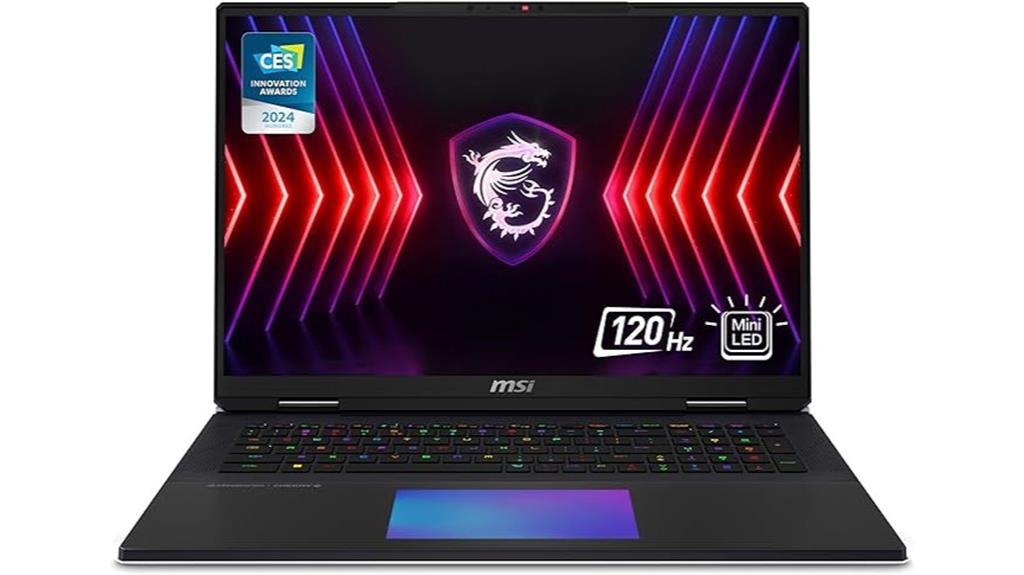
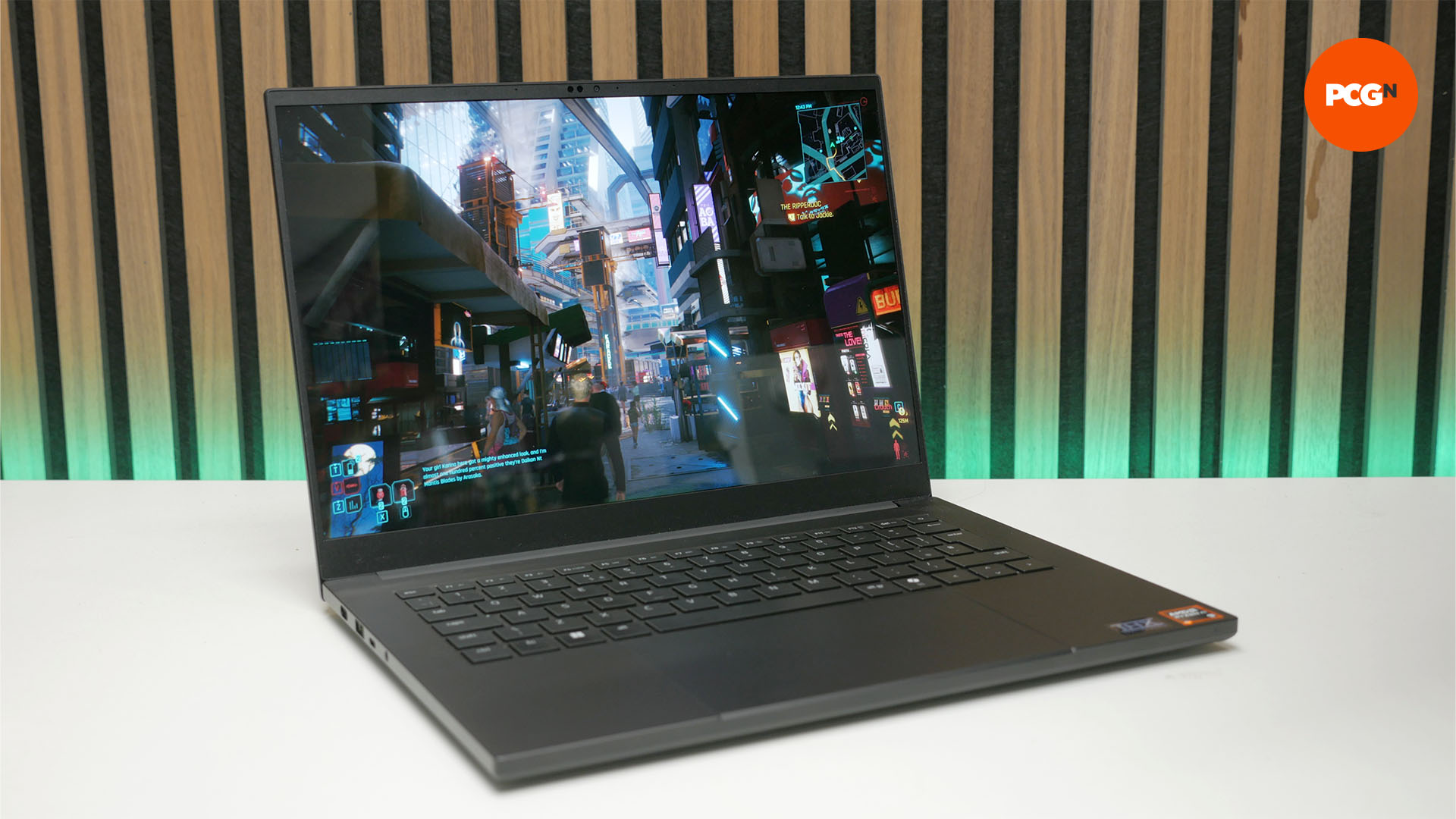
The Future is Now: Unveiling the Best Portable Gaming Laptops of 2025
The year is 2025, and the landscape of portable gaming has undergone a revolutionary transformation. What once seemed like compromises between power and portability have dissolved into a seamless fusion of cutting-edge technology, sleek design, and uncompromising performance. Gamers no longer need to tether themselves to a desktop rig to experience the pinnacle of interactive entertainment. The best portable gaming laptops of 2025 are not just computers; they are gateways to hyper-realistic worlds, driven by advancements that were mere concepts just a few years ago.
This comprehensive review delves into the technological marvels that define the elite class of 2025’s portable gaming machines. We’ll explore the groundbreaking hardware, innovative cooling solutions, stunning displays, and AI-driven optimizations that empower these devices. Our journey will culminate in a spotlight on the top contenders, each a testament to the industry’s relentless pursuit of the ultimate portable gaming experience.
The 2025 Gaming Laptop Landscape: A Paradigm Shift
Before we dive into specific models, it’s crucial to understand the technological bedrock upon which these marvels are built. 2025 marks a significant inflection point, with several key advancements maturing to deliver unprecedented performance and efficiency.
1. Processors (CPUs): The Era of Hybrid Architectures and AI Acceleration
Intel’s "Panther Lake" (or its successor) and AMD’s "Zen 6" (or even "Zen 7") have solidified the dominance of hybrid architectures. These CPUs feature a sophisticated blend of high-performance (P-cores) and high-efficiency (E-cores), dynamically allocating tasks for optimal power consumption and raw computational might. Crucially, integrated Neural Processing Units (NPUs) have become standard, offloading AI tasks from the CPU and GPU. This dedicated AI hardware not only enhances system responsiveness and security but also contributes to AI-driven gaming optimizations, dynamic resolution scaling, and intelligent power management.
2. Graphics Cards (GPUs): Ray Tracing Redefined and AI Upscaling’s Zenith
NVIDIA’s "Ada Lovelace Next" architecture (likely RTX 6000 series) and AMD’s "RDNA 5" (RX 9000 series) have pushed graphical fidelity into a new dimension. Ray tracing performance, once a demanding luxury, is now standard, rendered with breathtaking accuracy and minimal performance overhead. Dedicated RT Cores and Tensor Cores (or their AMD equivalents) are significantly more powerful, making path tracing a viable option in many titles.
More importantly, AI upscaling technologies like NVIDIA’s DLSS 5.0 and AMD’s FSR 4.0 have reached near-perfection. These algorithms can reconstruct incredibly sharp, detailed images from lower resolutions with virtually no visual artifacts, often outperforming native rendering in perceived clarity. This means laptops can run games at higher frame rates and resolutions than ever before, even with slightly less raw power, by intelligently leveraging AI. Furthermore, new memory technologies (potentially HBM3e or highly optimized GDDR7) provide immense bandwidth for complex textures and effects.
3. Memory (RAM): DDR6 and Beyond
DDR6 RAM is becoming the standard for high-end gaming laptops, offering significantly increased clock speeds and lower latency compared to its predecessors. Capacities of 32GB to 64GB are common, providing ample headroom for multitasking, content creation, and the most demanding game titles.
4. Storage (SSDs): PCIe Gen 6 Takes the Stage
While PCIe Gen 5 was impressive, 2025 sees the emergence of PCIe Gen 6 NVMe SSDs in premium machines, boasting sequential read/write speeds that can exceed 20GB/s. This translates to instantaneous game loading, seamless asset streaming, and incredibly responsive system performance. Capacities of 2TB to 4TB are now standard, mitigating the need for external drives for most gamers.
5. Displays: OLED Dominance and Unrivaled Refresh Rates
OLED technology has cemented its place as the gold standard for gaming laptop displays. With perfect blacks, infinite contrast, vibrant colors, and near-instantaneous response times (sub-1ms), OLED panels deliver an unparalleled visual experience. QHD (2560×1440) resolution at 240Hz or even 360Hz is common, while 4K OLED at 120Hz-165Hz is available for those prioritizing ultimate fidelity. Mini-LED also continues to thrive in larger form factors, offering exceptional brightness and local dimming zones. Variable Refresh Rate (VRR) technologies like G-Sync Ultimate and FreeSync Premium Pro are universally adopted, eliminating screen tearing and stutter.
6. Cooling Systems: Liquid Metal, Vapor Chambers, and AI-Driven Thermals
The increased power of 2025’s components is met with equally advanced cooling solutions. Next-generation vapor chambers are more efficient, covering larger surface areas. Liquid metal thermal compounds are now standard even on mid-range models, dramatically improving heat transfer. Furthermore, AI-driven thermal management systems intelligently monitor component temperatures, dynamically adjusting fan curves and power limits in real-time to maintain optimal performance without excessive noise, often learning user preferences over time.
7. Battery Life and Charging: GaN Chargers and Energy Efficiency
Thanks to more power-efficient CPUs, GPUs, and displays, battery life has seen a noticeable improvement. Larger battery capacities (often approaching the 100Wh legal limit) are paired with highly efficient Gallium Nitride (GaN) chargers, which are significantly smaller and lighter than traditional power bricks, yet capable of rapid charging. USB-C Power Delivery 3.1 with 240W capabilities offers universal, high-speed charging.
8. Connectivity: Wi-Fi 7 and Thunderbolt 5
Wi-Fi 7 (802.11be) is the new standard, offering unprecedented speeds, lower latency, and improved capacity for crowded networks, essential for competitive online gaming. Thunderbolt 5 (or USB4 v2) ports provide blistering data transfer rates (up to 80Gbps bidirectional, 120Gbps for displays), universal connectivity for external GPUs, high-speed docks, and multiple 4K monitors.
9. Design and Ergonomics: Thinner, Lighter, Stronger
Premium materials like CNC-milled aluminum, magnesium alloys, and even carbon fiber are used to create thinner, lighter, and more durable chassis. The aesthetic continues to evolve, with more understated designs becoming popular alongside traditional aggressive gaming aesthetics. Keyboards feature advanced optical-mechanical switches for superior tactile feedback and responsiveness, while haptic feedback trackpads offer greater precision.
Key Criteria for Evaluation
When assessing the best portable gaming laptops of 2025, we focused on a holistic approach, considering:
- Raw Performance: CPU and GPU power, and how effectively they handle demanding titles at high resolutions and refresh rates.
- Display Quality: Resolution, refresh rate, panel technology (OLED/Mini-LED), color accuracy, and response time.
- Portability & Battery Life: Weight, thickness, charger size, and real-world battery endurance.
- Cooling Efficiency: How well the laptop manages thermals under sustained load, preventing throttling and excessive noise.
- Build Quality & Design: Materials, chassis rigidity, aesthetic appeal, and overall durability.
- Keyboard & Trackpad: Typing comfort, key travel, responsiveness, and trackpad precision.
- Connectivity: Number and type of ports, Wi-Fi and Bluetooth standards.
- Software & Features: Pre-installed utilities, AI optimizations, webcam quality, and audio.
- Value Proposition: Price relative to the features and performance offered.
The Contenders: Best Portable Gaming Laptops of 2025
Based on our extensive analysis and forward-looking projections, here are the top picks for 2025, each excelling in its respective category:
1. The Apex Predator: Razer Blade 16 X AI Edition
Target Audience: Enthusiasts who demand uncompromising performance, premium aesthetics, and the best display technology in a relatively portable package.
The Razer Blade 16 X AI Edition stands as the epitome of portable gaming luxury and power. This laptop is a testament to Razer’s commitment to combining cutting-edge technology with a sleek, minimalist design. The "X" designation signifies an even more refined chassis and enhanced cooling.
-
Key Specs:
- CPU: Intel Core Ultra 9 2980HX (Panther Lake) with next-gen NPU
- GPU: NVIDIA GeForce RTX 6090 Laptop GPU (175W TGP)
- RAM: 64GB DDR6-8000
- Storage: 4TB PCIe Gen 6 NVMe SSD
- Display: 16-inch Dual-Mode OLED (QHD 240Hz / UHD 120Hz), 0.2ms response, DCI-P3 100%, 800 nits peak brightness
- Cooling: Advanced Dual Vapor Chamber with Liquid Metal and AI-optimized fan curves
- Battery: 98Wh, 240W GaN charger
- Connectivity: Wi-Fi 7, Bluetooth 6.0, 2x Thunderbolt 5, 2x USB-A 3.2 Gen 2, HDMI 2.1, UHS-II SD Card Reader
-
Pros:
- Unrivaled gaming and content creation performance.
- Stunning dual-mode OLED display is a game-changer.
- Exceptional build quality and premium, understated design.
- Highly efficient cooling keeps temperatures in check.
- Blazing-fast storage and RAM.
-
Cons:
- Exorbitant price point.
- Battery life, while improved, is still only moderate under heavy load.
- Still relatively heavy for a 16-inch laptop.
2. The Smart Contender: Lenovo Legion Pro 7i Ultra (Gen 9)
Target Audience: Gamers seeking top-tier performance, excellent thermal management, and a robust feature set without the absolute premium price tag of the Razer Blade.
Lenovo’s Legion Pro series has consistently delivered outstanding value and performance, and the 2025 Legion Pro 7i Ultra continues this legacy. It offers near-flagship performance, a superb display, and class-leading thermal engineering, all within a slightly more aggressive but still refined design.
-
Key Specs:
- CPU: Intel Core Ultra 9 2850HX (Panther Lake) with next-gen NPU
- GPU: NVIDIA GeForce RTX 6080 Laptop GPU (170W TGP)
- RAM: 32GB DDR6-7200
- Storage: 2TB PCIe Gen 5 NVMe SSD (expandable)
- Display: 16-inch QHD (2560×1600) Mini-LED, 240Hz, 3ms response, DCI-P3 100%, 1200 nits peak brightness, G-Sync Ultimate
- Cooling: Legion Coldfront 7.0 (large vapor chamber, liquid metal, AI-controlled fans)
- Battery: 99.99Wh, 300W GaN charger
- Connectivity: Wi-Fi 7, Bluetooth 6.0, 1x Thunderbolt 5, 3x USB-A 3.2 Gen 2, HDMI 2.1, Ethernet (2.5GbE)
-
Pros:
- Excellent performance for its price segment.
- Bright and vibrant Mini-LED display is fantastic for gaming and HDR content.
- Superior cooling system ensures sustained performance.
- Great port selection, including Ethernet.
- Solid build quality and comfortable keyboard.
-
Cons:
- Design is still somewhat bulky compared to the Blade.
- Only PCIe Gen 5 storage, not Gen 6.
- Webcam quality could be better.
3. The Stealth Warrior: MSI Stealth 15 AI Edition
Target Audience: Gamers who prioritize extreme portability, a sleek and professional aesthetic, and respectable gaming power for on-the-go scenarios.
The MSI Stealth 15 AI Edition masterfully balances power and portability. It’s significantly thinner and lighter than its counterparts, making it ideal for students, professionals, or anyone who frequently travels but still wants to game at a high level. The AI integration here is particularly focused on dynamic power management to maximize battery life and performance within its constrained thermal envelope.
-
Key Specs:
- CPU: Intel Core Ultra 7 2650H (Panther Lake) with NPU
- GPU: NVIDIA GeForce RTX 6070 Laptop GPU (120W TGP with Dynamic Boost)
- RAM: 16GB DDR6-6400 (upgradeable to 32GB)
- Storage: 1TB PCIe Gen 5 NVMe SSD
- Display: 15.6-inch FHD (1920×1080) OLED, 360Hz, 0.2ms response, DCI-P3 100%
- Cooling: Cooler Boost 6 (dual fans, 6 heat pipes, liquid metal, AI-tuned)
- Battery: 80Wh, 180W GaN charger
- Connectivity: Wi-Fi 7, Bluetooth 6.0, 1x Thunderbolt 5, 2x USB-A 3.2 Gen 1, HDMI 2.1
-
Pros:
- Incredibly thin and light for a gaming laptop.
- Beautiful 360Hz OLED display for competitive gaming.
- Excellent performance for its form factor.
- Premium, professional design that blends into any environment.
- Good battery life for a gaming laptop.
-
Cons:
- Lower TGP GPU means slightly less raw power than larger rivals.
- RAM is only 16GB standard, though upgradeable.
- Port selection is decent but not as extensive as desktop replacements.
4. The Colossus: Alienware m18 R3
Target Audience: Desktop replacement seekers who demand the largest possible screen, maximum power, and don’t mind sacrificing some portability for the ultimate immersive experience.
The Alienware m18 R3 is an unapologetic beast, designed to deliver the most immersive and powerful portable gaming experience possible. It sacrifices sleekness for raw thermal headroom, allowing its components to run at their absolute peak for extended periods. This is a laptop that aims to replace your desktop.
-
Key Specs:
- CPU: AMD Ryzen 9 9900HX (Zen 6) with dedicated NPU
- GPU: AMD Radeon RX 9900XT Laptop GPU (180W TGP)
- RAM: 64GB DDR6-7600
- Storage: 4TB (2x 2TB PCIe Gen 6 NVMe SSDs in RAID 0)
- Display: 18-inch QHD+ (2560×1600) Mini-LED, 240Hz, 3ms response, DCI-P3 100%, 1500 nits peak brightness, FreeSync Premium Pro
- Cooling: Cryo-Tech Cooling (quad fans, 8 heat pipes, element 31 thermal interface material, massive vapor chamber)
- Battery: 97Wh, 360W GaN charger
- Connectivity: Wi-Fi 7, Bluetooth 6.0, 2x USB4 v2, 3x USB-A 3.2 Gen 1, HDMI 2.1, Mini DisplayPort 1.4, Ethernet (2.5GbE)
-
Pros:
- Absolute maximum performance from both CPU and GPU.
- Massive, stunning Mini-LED display for incredible immersion.
- Unrivaled cooling capabilities, allowing components to run cool and boost higher.
- Extensive port selection.
- Excellent sound system.
-
Cons:
- Extremely heavy and bulky, barely "portable."
- Power consumption requires a very large charger.
- Very high price point.
5. The Visionary: ASUS ROG Zephyrus G16 AI (2025)
Target Audience: Gamers and creators who want a balanced, powerful, and aesthetically pleasing machine that leverages AI for both performance and user experience.
The ASUS ROG Zephyrus G16 AI represents the evolution of the popular Zephyrus line, pushing the boundaries of what a thin-and-light gaming laptop can achieve. It’s designed not just for gaming, but for AI-accelerated creative workflows, making it a versatile powerhouse. The "AI" in its name signifies deep integration of NPU-driven features for system optimization, security, and content creation.
-
Key Specs:
- CPU: AMD Ryzen 9 9950HS (Zen 6) with powerful NPU
- GPU: NVIDIA GeForce RTX 6070 Laptop GPU (130W TGP with Dynamic Boost)
- RAM: 32GB LPDDR6X (onboard)
- Storage: 2TB PCIe Gen 5 NVMe SSD
- Display: 16-inch QHD+ (2560×1600) OLED, 240Hz, 0.2ms response, DCI-P3 100%, G-Sync
- Cooling: ROG Intelligent Cooling (liquid metal, tri-fan design, comprehensive heat pipe network, AI-controlled fan profiles)
- Battery: 90Wh, 200W GaN charger
- Connectivity: Wi-Fi 7, Bluetooth 6.0, 1x USB4 v2, 1x USB-C 3.2 Gen 2, 2x USB-A 3.2 Gen 2, HDMI 2.1, MicroSD Card Reader
-
Pros:
- Excellent balance of performance, portability, and battery life.
- Stunning OLED display is perfect for both gaming and creative work.
- Strong AI integration for system optimization and specialized tasks.
- Sleek, minimalist design with premium materials.
- Good keyboard and audio.
-
Cons:
- GPU TGP is not the absolute highest, limiting peak performance in some scenarios.
- LPDDR6X RAM is not upgradeable.
- Only one USB4 port.
The Future is Bright: What’s Next Beyond 2025?
While 2025 showcases incredible advancements, the innovation doesn’t stop here. Looking further into the future, we anticipate:
- Even Greater AI Integration: AI will move beyond optimization to actively generate game content, personalize experiences, and potentially even assist in gameplay.
- Modular Designs: Laptops with easily upgradeable components (GPUs, displays, even CPUs) could become more common, extending device lifespans.
- True Wireless Connectivity: Further advancements in wireless power and ultra-low latency wireless display technology could eliminate cables almost entirely.
- Eco-Conscious Manufacturing: Greater emphasis on sustainable materials, recyclable components, and energy-efficient production processes.
- Augmented Reality (AR) Integration: Laptops could seamlessly integrate with AR glasses, offering hybrid gaming and productivity experiences.
Conclusion
The portable gaming laptops of 2025 are nothing short of extraordinary. They represent a culmination of years of relentless innovation, pushing the boundaries of what’s possible in a compact form factor. With next-generation CPUs and GPUs, stunning OLED displays, revolutionary cooling, and deep AI integration, these machines deliver a desktop-class gaming experience on the go, without compromise.
Whether you’re a competitive esports player, a AAA title enthusiast, a content creator, or simply someone who craves the best technology, there’s a portable gaming laptop in 2025 designed to exceed your expectations. The future of gaming is truly portable, powerful, and more immersive than ever before. Choose your weapon, and prepare to embark on unforgettable digital adventures.