
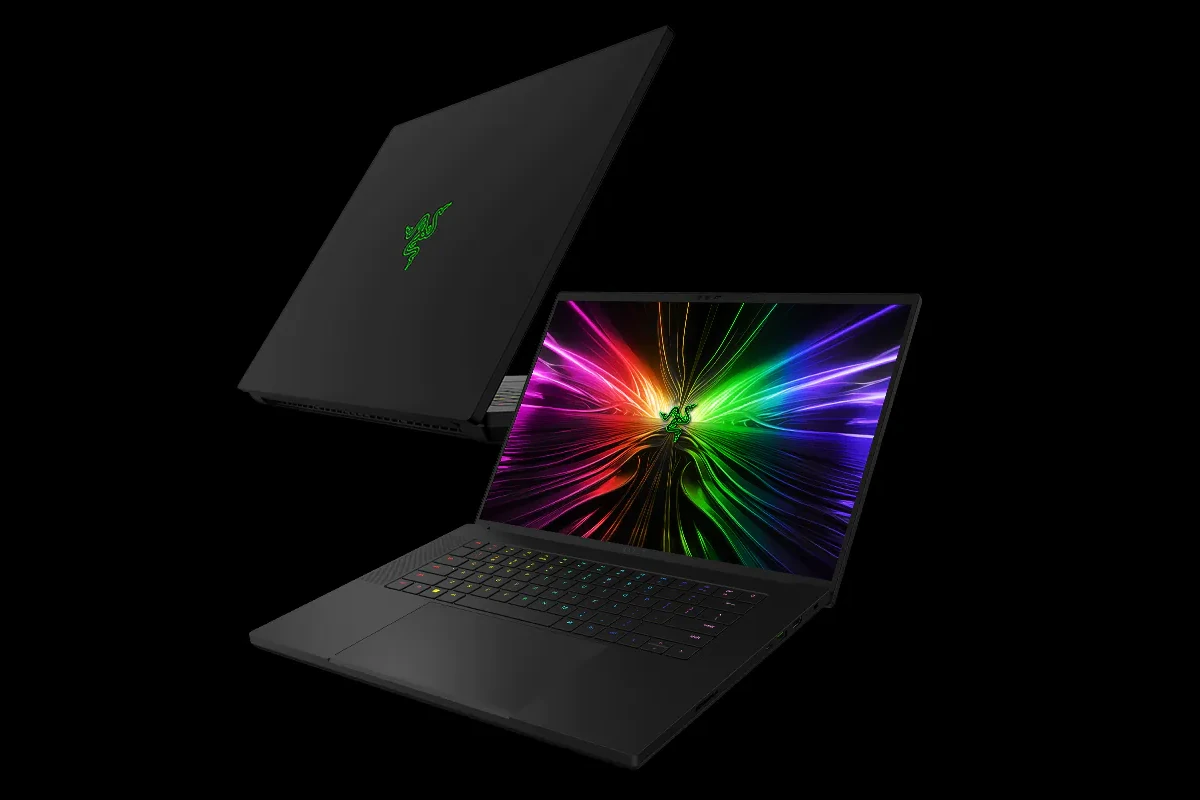
The Creative Powerhouses: Latest Gaming Laptops for Content Creators in 2025
The line between high-end gaming and professional content creation has never been blurrier. As we stride into 2025, the latest gaming laptops are no longer just tools for immersive virtual worlds; they are increasingly the preferred mobile workstations for video editors, 3D artists, graphic designers, streamers, and AI developers. The relentless pursuit of performance, graphical fidelity, and advanced cooling in the gaming sector directly translates into unparalleled capabilities for creators who demand speed, reliability, and stunning visual accuracy on the go.
This article delves into the cutting-edge landscape of gaming laptops in 2025, exploring the pivotal hardware innovations, AI integrations, and design philosophies that make them indispensable for content creators. We will examine what to expect from these mobile beasts and how they are poised to revolutionize creative workflows.
The Symbiotic Relationship: Why Gaming Laptops Dominate Creation
At its core, content creation—especially in areas like 4K/8K video editing, complex 3D rendering, game development, and high-resolution photo manipulation—requires massive computational power. These tasks parallel the demands of running the latest AAA games at ultra settings with high frame rates. Both scenarios heavily leverage:
- Powerful Multi-Core CPUs: For compiling code, rendering timelines, multitasking, and handling intricate calculations.
- High-Performance GPUs with Ample VRAM: Essential for real-time rendering, accelerating video encoding/decoding, running AI models, applying complex visual effects, and powering high-resolution displays.
- Fast, High-Capacity RAM: Critical for loading large project files, running multiple applications simultaneously, and maintaining responsiveness.
- Blazing-Fast Storage: To quickly access and save massive files, reducing loading times and improving overall workflow efficiency.
- Advanced Cooling Solutions: To sustain peak performance during prolonged, intensive workloads without thermal throttling.
- High-Resolution, Color-Accurate Displays: For precise visual work and an immersive viewing experience.
Gaming laptops, by their very design, are engineered to excel in these exact areas, making them natural powerhouses for the creative professional.
Hardware Innovations Defining 2025’s Creative Workstations
By 2025, several technological advancements will have matured, pushing the boundaries of what’s possible in a portable form factor.
1. Next-Generation Processors: The Brains of the Operation
Intel and AMD will continue their fierce competition, delivering CPUs that are not only faster but also significantly more efficient and AI-savvy.
- Intel’s Future Architectures (e.g., Lunar Lake/Nova Lake equivalents): Expect a significant leap in core count, clock speeds, and particularly, in integrated AI acceleration. Intel’s designs will likely feature highly sophisticated Neural Processing Units (NPUs) deeply integrated into the CPU, capable of handling a vast array of AI tasks directly on the chip. This will accelerate AI-driven features in creative software—from intelligent upscaling and noise reduction in video editors to generative AI tools for image creation and code completion. Their hybrid architecture will be further refined, dynamically allocating tasks between performance and efficiency cores for optimal power consumption and sustained peak performance.
- AMD’s Zen 5/Zen 6 Based CPUs: AMD will counter with architectures focusing on even greater instruction per clock (IPC) improvements, higher core counts, and enhanced efficiency. Their integrated graphics (iGPUs) will also see substantial upgrades, providing robust performance for lighter creative tasks and extending battery life. AMD’s processors will also feature dedicated AI accelerators, tightly integrated with their core architecture to provide competitive AI processing power for creative applications and system-level optimizations.
For content creators, these CPUs mean faster compile times, smoother 8K video playback, quicker rendering of complex scenes, and more responsive multitasking across demanding applications.
2. Revolutionary Graphics Cards: The Muscle and Visualizer
The GPU remains the single most critical component for many creative tasks, and 2025 will see the arrival of truly next-gen offerings.
- NVIDIA GeForce RTX 5000 Series (or equivalent): NVIDIA’s dominance in professional graphics will likely be cemented by the RTX 5000 series. These GPUs will feature substantially more CUDA cores, Tensor Cores (for AI acceleration), and RT Cores (for ray tracing) than their predecessors. Expect VRAM capacities to become even more generous, with 24GB and 32GB becoming common in high-end mobile GPUs, crucial for handling massive textures, complex 3D scenes, and large AI models. Hardware-accelerated encoding/decoding of formats like AV1 will be standard, making 8K workflows smoother than ever. DLSS (and its next iterations) will not only enhance gaming but also provide significant performance boosts for real-time rendering and previewing in creative applications.
- AMD Radeon RX 8000/9000 Series (or equivalent): AMD will push its RDNA architecture further, focusing on improved raw rasterization performance, enhanced ray tracing capabilities, and competitive VRAM configurations. Their FSR technology will continue to evolve, offering an open-source alternative for performance scaling. AMD’s dedicated AI accelerators within their GPUs will also see significant improvements, bolstering their capabilities in AI-driven creative workflows.
- Intel Arc (Future Generations): Intel’s continued investment in discrete graphics will likely yield more competitive offerings, especially in the mid-range and upper-mid-range segments, providing more options for creators looking for strong performance at potentially more accessible price points. Their Xe Matrix Extensions (XMX) engines will be further optimized for AI workloads.
For creators, these GPUs mean real-time 3D rendering with photorealistic ray tracing, instantaneous application of complex filters, lightning-fast video exports, and the ability to train and run sophisticated AI models directly on their laptops.
3. Hyper-Fast Memory (RAM): The Multitasking Backbone
By 2025, DDR5 will be the standard, with higher capacities and speeds becoming prevalent.
- DDR5-8000+ MHz: Expect speeds to climb significantly, reducing latency and increasing bandwidth.
- 64GB and 128GB Configurations: While 32GB is common now, 64GB will become the new sweet spot for serious creators, with 128GB available for those working with extremely large datasets, multi-camera 8K projects, or extensive virtual machines.
- LP-DDR5X: Low-power DDR5X will also gain traction, offering excellent performance with reduced power consumption, benefiting battery life in more portable designs.
This abundance of fast RAM will eliminate bottlenecks when working with multiple high-resolution assets, complex simulations, or juggling several demanding applications simultaneously.
4. PCIe Gen 5/Gen 6 NVMe SSDs: Instantaneous Storage
Storage speeds will take another monumental leap.
- PCIe Gen 5 NVMe: Will be standard, offering sequential read/write speeds exceeding 14GB/s, drastically cutting down project loading times, file transfers, and application launches.
- PCIe Gen 6 NVMe (Emerging): While perhaps not fully mainstream, early adopters might see laptops supporting PCIe Gen 6, pushing speeds even higher.
- Multi-SSD Configurations: Many high-end gaming laptops will feature two or more M.2 slots, allowing creators to install multiple terabytes of ultra-fast storage (e.g., a 2TB primary drive for OS/applications and a 4TB secondary drive for active projects).
- Enhanced Cooling for SSDs: With increasing speeds, SSDs generate more heat. Expect advanced thermal pads and heatsinks integrated into laptop designs to prevent throttling.
For creators, this means near-instantaneous access to massive libraries of assets, seamless scrubbing through 8K video timelines, and faster iteration cycles.
5. Exquisite Displays: The Canvas of Creation
Displays will continue to be a battleground for innovation, offering both stunning visuals and crucial color accuracy.
- OLED and Mini-LED Dominance: These technologies will be mainstream in high-end gaming laptops, offering true blacks, infinite contrast ratios, vibrant colors, and exceptional HDR performance.
- QHD (2560×1440) and 4K (3840×2160) Resolutions: QHD will remain popular for its balance of sharpness and high refresh rates, while 4K will be standard on top-tier models for ultimate detail.
- High Refresh Rates (165Hz-240Hz+): Even at 4K, refresh rates will push towards 120Hz and beyond, providing incredibly smooth visuals for both gaming and motion graphics work.
- Exceptional Color Accuracy: Displays will routinely cover 100% DCI-P3 and often 100% Adobe RGB, with factory calibration becoming a standard feature. Delta E values of less than 1 will be common, ensuring professional-grade color fidelity.
- Touchscreen and Stylus Support: More gaming laptops will integrate high-quality touchscreens and support for active styluses, enhancing usability for graphic designers and artists.
These displays provide an unparalleled visual experience, critical for color grading, precise photo editing, and immersive 3D visualization.
6. Advanced Cooling Systems: Sustained Peak Performance
As components become more powerful, efficient cooling becomes paramount to prevent thermal throttling.
- Vapor Chambers and Liquid Metal: These will be standard in high-performance models, offering superior heat dissipation compared to traditional heat pipes.
- AI-Optimized Fan Curves: Machine learning algorithms will dynamically adjust fan speeds based on real-time workload, temperature, and even user preference, optimizing for performance or acoustics.
- External Liquid Cooling Ports: Brands like Alienware (with their Graphics Amplifier successor) or ASUS (with ROG Nebula external coolers) may offer more refined and integrated solutions for external liquid cooling, allowing desktop-level sustained performance for intensive, long-duration renders at home.
- Innovative Airflow Designs: Chassis will be engineered with more sophisticated intake and exhaust vents, optimizing airflow efficiency.
Effective cooling ensures that creators can run demanding renders or exports for hours without performance degradation.
7. Enhanced Battery Life and Portability: Power on the Go
Despite increasing power, efficiency gains across all components will lead to better battery life.
- Larger Battery Capacities: The physical limits of airline regulations will remain, but optimized power delivery and more efficient components will extend usage.
- USB-C Power Delivery 3.1 (240W): Widespread adoption of USB-C PD 3.1 will allow for rapid charging and the ability to use a single charger for the laptop and other devices.
- Thinner and Lighter Designs: Advanced materials like magnesium alloys and carbon fiber will enable lighter yet more robust chassis, making these powerful machines genuinely portable.
This combination allows creators to work effectively away from a power outlet for longer periods, enhancing flexibility.
8. Next-Gen Connectivity: The Data Pipeline
Modern creative workflows demand fast and versatile connectivity.
- Wi-Fi 7 (802.11be): Will be standard, offering multi-gigabit speeds, lower latency, and increased capacity for seamless cloud collaboration, streaming, and large file transfers.
- Bluetooth 6.0 (or equivalent): Improved range, stability, and audio quality for wireless peripherals.
- Thunderbolt 5 / USB4 v2: These ports will offer unprecedented bandwidth (up to 80 Gbps, or even 120 Gbps in specific modes), allowing for multiple 8K displays, external GPUs, and blazing-fast external storage.
- HDMI 2.1a: For connecting to high-resolution, high-refresh-rate external monitors.
- Integrated SD Card Readers: Still crucial for photographers and videographers, these will be high-speed (UHS-II or faster).
These connectivity options ensure seamless integration with professional peripherals and efficient data management.
The AI Revolution: Beyond the NPU
While dedicated NPUs and GPU Tensor Cores are vital, 2025 will see AI permeate the entire system, offering intelligent assistance at every level.
- OS-Level AI Integration (e.g., Windows 12 AI features): The operating system itself will leverage AI for performance optimization, smart power management, background task prioritization, and even predictive assistance in creative applications. Imagine the OS automatically optimizing system resources for your current DaVinci Resolve project.
- AI-Powered Creative Software: This is where the biggest impact will be felt. AI will be deeply integrated into tools like Adobe Creative Suite, Blender, DaVinci Resolve, and more.
- Generative AI: For quick asset generation (textures, models, concept art), AI-assisted video editing (auto-cut, smart stabilization, content suggestion), and even AI-driven music composition.
- Intelligent Upscaling & Denoising: Real-time, AI-powered image and video enhancement, making lower-resolution footage usable in high-res projects.
- AI-Assisted Color Grading & VFX: Automated color correction, rotoscoping, and effect application, significantly speeding up tedious tasks.
- Code Generation & Optimization: For game developers and programmers, AI will assist in writing, debugging, and optimizing code.
- System Optimization: AI will learn user habits to predict workloads, pre-fetch data, and manage power profiles for optimal performance or battery life.
This pervasive AI integration will transform creative workflows, automating mundane tasks, sparking new ideas, and allowing creators to focus on the artistic vision rather than technical intricacies.
What Content Creators Should Prioritize in 2025
When selecting a gaming laptop for creative work in 2025, creators should focus on these key aspects:
- GPU VRAM & Core Count: Absolutely critical for video editing, 3D rendering, and AI tasks. Aim for at least 24GB VRAM in high-end models.
- CPU Core Count & NPU: For multitasking, compilation, and general system responsiveness, along with dedicated AI acceleration.
- RAM Capacity: 64GB will be the new baseline for serious creators; 128GB for extreme workloads.
- Display Quality: OLED or Mini-LED with 100% DCI-P3 coverage, factory calibration, and high resolution (QHD or 4K).
- Storage Speed & Capacity: PCIe Gen 5 NVMe with multiple slots for 4TB+ total storage.
- Cooling System: Robust thermal management is non-negotiable for sustained performance.
- Connectivity: Thunderbolt 5/USB4 v2, Wi-Fi 7, and essential media card readers.
Top Contenders (Archetypes) in 2025
While specific models are speculative, leading brands will likely offer categories catering to different creator needs:
- The Uncompromising Workstation (e.g., MSI Titan, ASUS ROG Strix Scar, Alienware m18/x18 equivalent): These will be desktop replacements, offering the absolute highest-end CPUs and GPUs, maximum RAM/storage, and robust cooling. They prioritize raw power and may be less portable.
- The Portable Powerhouse (e.g., Razer Blade, ASUS ROG Zephyrus, Alienware x16 equivalent): Striking a balance between performance and portability, these will feature top-tier components in sleeker, thinner chassis, often with premium OLED displays and excellent battery life for their class.
- The Value-Oriented Performer (e.g., Lenovo Legion Pro, HP Omen, Acer Predator Helios equivalent): Offering exceptional performance-per-dollar, these laptops will provide near-flagship CPU/GPU power, ample RAM, and excellent displays, making high-end creation more accessible.
These brands, alongside others like Gigabyte, will continue to innovate, pushing the boundaries of what’s possible in mobile computing.
Challenges and Considerations
Despite the advancements, challenges remain:
- Price: Cutting-edge technology comes at a premium. High-end gaming laptops for creators will be significant investments.
- Heat & Noise: While cooling improves, pushing components to their limits will still generate heat and fan noise under heavy loads.
- Battery Life vs. Performance: While improving, truly sustained peak performance still often requires plugging into power.
- Software Optimization: While hardware will be ready, creative software developers must continue to optimize their applications to fully leverage the new AI accelerators and advanced GPU features.
Conclusion
2025 marks a pivotal year where the convergence of gaming and content creation reaches new heights. The latest gaming laptops are transforming into sophisticated, AI-enhanced mobile workstations, offering an unprecedented blend of raw power, visual fidelity, and intelligent assistance. For content creators, these machines represent not just an upgrade, but a fundamental shift in how and where they can bring their visions to life. With next-gen CPUs, revolutionary GPUs, lightning-fast storage, and stunning displays, coupled with pervasive AI integration, the creative possibilities are boundless, empowering artists and innovators to craft the future, one powerful pixel at a time.
