
Absolutely! Here’s a comprehensive 2000-word head-to-head article comparing the ROG Zephyrus G16 and the Razer Blade 16.
The Battle of the 16-Inch Powerhouses: ROG Zephyrus G16 vs. Razer Blade 16 Head-to-Head
In the fiercely competitive world of high-performance laptops, the 16-inch form factor has emerged as a sweet spot, offering an ideal blend of expansive screen real estate, robust cooling, and desktop-rivalling power, all while maintaining a semblance of portability. At the forefront of this segment are two titans, each with a distinct philosophy and loyal following: the ASUS ROG Zephyrus G16 and the Razer Blade 16. Both machines are engineered to satisfy the insatiable demands of serious gamers and creative professionals alike, yet they approach this challenge from divergent angles, resulting in nuanced differences that can significantly sway a purchasing decision.
This article delves deep into a head-to-head comparison, dissecting every facet of the ROG Zephyrus G16 and the Razer Blade 16. From their aesthetic design and build quality to their raw performance, innovative displays, and overall user experience, we will explore which laptop truly reigns supreme in various categories, and ultimately, help you determine which of these formidable machines is the perfect fit for your specific needs and budget.
1. Design and Build Quality: A Tale of Two Philosophies
The first impression a laptop makes is often its design and the tactile quality of its build. Here, the Zephyrus G16 and Blade 16 present two distinct approaches.
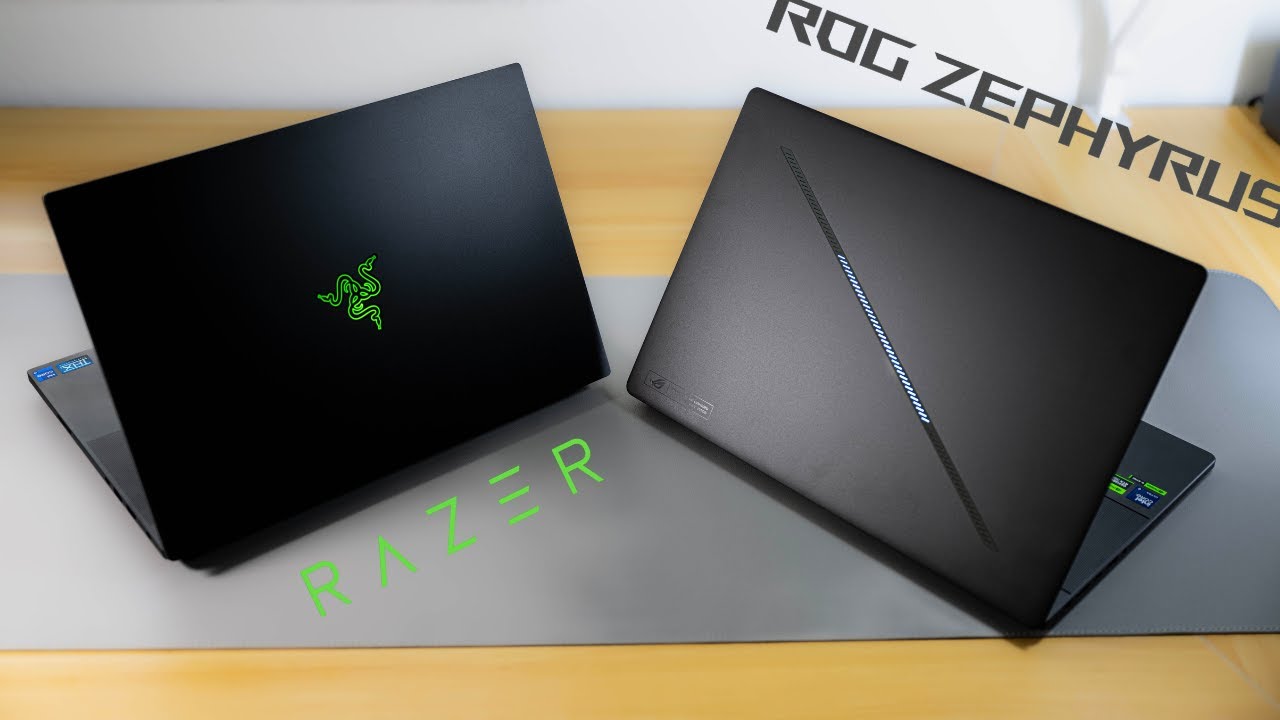
The ROG Zephyrus G16 (referring to its latest iterations, particularly the 2024 model) has undergone a significant design evolution, moving towards a more minimalist, sophisticated aesthetic. ASUS has embraced an all-aluminum chassis, giving the G16 a premium, unibody feel that belies its gaming pedigree. The signature "AniMe Matrix" LED array on the lid, while still an option on some models, has been complemented or even replaced by a more understated "Slash Lighting" design, a diagonal LED strip that adds a touch of modern flair without screaming "gamer." The G16’s design focuses on clean lines, a thin profile (especially for a 16-inch gaming machine), and a relatively lightweight construction. The overall impression is one of refined power, equally at home in a professional boardroom as it is at a LAN party. The finish is typically a matte black or a sleek grey, resistant to fingerprints and exuding a sense of understated elegance.
In stark contrast, the Razer Blade 16 continues to champion its iconic, unyielding design language: a monolithic, precision-crafted CNC aluminum chassis that screams premium. Often referred to as the "MacBook Pro of Windows," the Blade 16 boasts impeccable build quality, with zero flex, perfectly uniform gaps, and a dense, reassuring heft. Its matte black finish (though other colors occasionally appear) is instantly recognizable, adorned only by the subtle, backlit Razer triple-headed snake logo on the lid. The design is unapologetically minimalist, industrial, and sleek, prioritizing a clean, uninterrupted aesthetic. Every edge is precisely cut, and the overall construction feels like a single, solid block of metal. This robust construction contributes to its weight, making it feel more substantial than the G16, but also incredibly durable.
Comparison: While both laptops offer excellent build quality, the Razer Blade 16 undeniably feels more "premium" due to its dense, unibody CNC aluminum construction. It exudes a sense of luxury and meticulous engineering. The Zephyrus G16, however, offers a lighter, slightly more versatile design that blends gaming aesthetics with professional sobriety more seamlessly, particularly with its latest redesigns. If ultimate robustness and a "luxury tank" feel are paramount, the Blade 16 wins. If you prefer a lighter, more modern, and slightly less ostentatious design, the G16 has the edge.
2. Display Technology: Visual Fidelity for Every Need
The display is arguably the most critical component for both gaming and content creation, and both the G16 and Blade 16 offer cutting-edge options.
The ROG Zephyrus G16 has embraced the OLED revolution, with its latest models frequently offering stunning 2.5K (2560×1600) OLED panels. These displays typically feature refresh rates up to 240Hz, incredibly low response times (often 0.2ms), perfect blacks, infinite contrast, and vibrant, accurate colors (100% DCI-P3 coverage). The high resolution makes text sharp and images detailed, while the high refresh rate and rapid response time are ideal for competitive gaming. ASUS also often offers excellent IPS options with high refresh rates and good color accuracy, but the OLED is the standout feature for many.
The Razer Blade 16, on the other hand, has carved out a niche with its groundbreaking Mini-LED displays. Many Blade 16 configurations offer a unique dual-mode display: a 4K (3840×2400) 120Hz mode for incredible detail and creator work, which can switch to a 1080p (1920×1200) 240Hz mode for high-refresh-rate competitive gaming. This Mini-LED technology provides thousands of local dimming zones, delivering exceptional brightness (often exceeding 1000 nits peak), incredibly deep blacks (rivaling OLED in dynamic range), and stunning HDR performance. Razer also offers high-refresh-rate QHD+ IPS panels for those who prefer a more traditional route.
Comparison: This is a fascinating battle. The Zephyrus G16’s OLED panels offer true pixel-level black and infinite contrast, often with incredibly fast response times, making them fantastic for both immersive gaming and color-accurate work. The Razer Blade 16’s Mini-LED, especially its dual-mode variant, offers unparalleled brightness, superior HDR capabilities, and the flexibility of switching between a high-resolution creator mode and a high-refresh-rate gaming mode. For pure contrast and response time, OLED usually wins. For peak brightness, HDR content, and versatility in resolution/refresh rate, Mini-LED is a compelling choice. Creators who need extreme brightness and HDR will lean towards the Blade, while those prioritizing perfect blacks and snappier pixel response might prefer the G16’s OLED. Gamers will be thrilled with either.
3. Performance: Unleashing Raw Power
Both laptops are designed to house the most powerful components available, but their thermal designs and power limits can dictate real-world performance differences.
CPU & GPU: Both the Zephyrus G16 and Razer Blade 16 typically feature the latest high-performance processors from Intel (e.g., Core Ultra 9 or Core i9 HX series) and top-tier NVIDIA GeForce RTX GPUs (up to an RTX 4090 Laptop).
- The Zephyrus G16 (2024 model) often features Intel’s new Core Ultra processors, which include dedicated NPUs for AI acceleration, along with NVIDIA’s RTX 40-series GPUs. ASUS is known for its intelligent thermal designs, utilizing liquid metal on the CPU and efficient vapor chambers or intricate heat pipe arrays to manage heat. While the G16 is powerful, ASUS sometimes opts for slightly lower Total Graphics Power (TGP) limits on its GPUs compared to more extreme gaming laptops, balancing performance with thinness and acoustics.
- The Razer Blade 16 consistently pushes the envelope, often featuring Intel’s most powerful HX-series processors and NVIDIA’s RTX 40-series GPUs, frequently running them at or near their maximum TGP limits. Razer employs a large, advanced vapor chamber cooling system to dissipate heat from these components, aiming for sustained high performance. This often means the Blade 16 can eke out a few percentage points more performance in benchmarks and demanding tasks due to its higher power delivery and robust cooling.
Cooling:
- The Zephyrus G16 utilizes a refined cooling system that typically includes multiple fans, numerous heat pipes, and often liquid metal thermal compound on the CPU. The system is designed to be effective while maintaining a relatively quiet operation under load.
- The Razer Blade 16 relies heavily on its substantial vapor chamber, which is highly efficient at spreading heat across a large area, coupled with dual fans. This allows it to handle the higher power draw of its components, often resulting in slightly better sustained performance in long gaming sessions or rendering tasks, albeit sometimes with louder fan noise.
Comparison: For raw, sustained performance, especially from the GPU, the Razer Blade 16 often has a slight edge due to its more aggressive TGP targets and robust vapor chamber cooling. It’s built to extract every last frame and every last computational unit from its hardware. The Zephyrus G16, while incredibly powerful, often aims for a more balanced approach, delivering excellent performance while prioritizing a quieter and cooler user experience, and a thinner chassis. For the absolute peak of performance without compromise, the Blade 16 might inch ahead. For fantastic performance with better thermals on the chassis and acoustics, the G16 is very competitive. Both include MUX switches and NVIDIA Advanced Optimus for optimal gaming performance.
4. Memory, Storage & Upgradability
Both laptops offer modern specifications in terms of RAM and storage.
The ROG Zephyrus G16 typically comes with DDR5 RAM, often with at least one user-upgradable SO-DIMM slot, allowing users to expand the memory capacity (e.g., from 16GB to 32GB or 48GB). It usually features two M.2 NVMe SSD slots, providing ample storage expansion options and even the possibility of RAID configurations for enhanced speed or redundancy.
The Razer Blade 16 also utilizes DDR5 RAM and typically offers two user-accessible M.2 NVMe SSD slots for storage expansion. While RAM is usually upgradable, some Blade models might have soldered RAM, so it’s essential to check the specific configuration. Razer generally provides configurations with generous storage from the outset.
Comparison: Both laptops offer good upgradability for storage, which is crucial for gamers and creators with large media libraries. The G16 often provides more consistent RAM upgradability, which can be a significant factor for future-proofing or heavy multitasking. It’s important to verify the exact RAM configuration (soldered vs. slotted) for any specific Blade 16 model.
5. Keyboard, Trackpad & Audio
Input devices and audio quality significantly impact the daily user experience.
The ROG Zephyrus G16 features a comfortable, spacious keyboard with decent key travel and tactile feedback. It typically includes per-key RGB backlighting (or zone-based on some models), which is customizable via ASUS’s Armoury Crate software. The trackpad is usually large, precise, and responsive, often made of glass, supporting Windows Precision drivers for smooth multi-touch gestures. Audio-wise, the G16 often comes with a multi-speaker setup (e.g., six speakers with force-canceling woofers) tuned with Dolby Atmos, delivering rich, loud, and clear sound for gaming and media consumption.
The Razer Blade 16 boasts a superb keyboard that is widely praised for its satisfying key travel, crisp actuation, and per-key Razer Chroma RGB lighting, which offers unparalleled customization. The layout is standard and comfortable for both typing and gaming. The trackpad is one of the largest and best on any Windows laptop, a glass surface with excellent tracking and responsiveness, mimicking the quality found in MacBooks. For audio, the Blade 16 typically features a quad-speaker array with THX Spatial Audio support, providing immersive sound that is clear, well-balanced, and surprisingly loud for a laptop.
Comparison: Both laptops offer excellent input devices and audio. The Razer Blade 16 often takes a slight lead in keyboard and trackpad quality due to its exceptional trackpad size and precision, and the highly customizable Chroma RGB lighting. Its speakers are also top-tier. The Zephyrus G16’s input devices are still very good, and its multi-speaker setup with Dolby Atmos can sound fantastic, making this a very close call. The choice here often comes down to personal preference for key feel and RGB ecosystem.
6. Port Selection & Connectivity
Connectivity is crucial for peripherals, external displays, and networking.
The ROG Zephyrus G16 generally offers a comprehensive selection of ports, including multiple USB-A ports, at least one USB-C with Thunderbolt 4 (on Intel models), HDMI 2.1, an SD card reader, and sometimes even an Ethernet port, depending on the specific model year. It supports Wi-Fi 6E or Wi-Fi 7 and Bluetooth 5.3.
The Razer Blade 16 also provides a robust array of ports, including USB-A, USB-C with Thunderbolt 4, HDMI 2.1, and a UHS-II SD card reader. However, it often omits an Ethernet port, relying solely on Wi-Fi for wired networking. It also supports the latest Wi-Fi 6E or Wi-Fi 7 and Bluetooth 5.3.
Comparison: Both offer excellent modern connectivity. The Zephyrus G16’s inclusion of an Ethernet port on some models gives it a slight edge for those who require stable, low-latency wired networking without needing a dongle. Otherwise, their port selections are very similar and well-suited for modern peripherals and displays.
7. Battery Life & Portability
For powerful 16-inch laptops, battery life and portability are often secondary to performance, but still important considerations.
The ROG Zephyrus G16 often packs a large battery (e.g., 90Wh or higher) and, combined with power-efficient components like Intel’s Core Ultra processors and NVIDIA’s Advanced Optimus technology, can deliver impressive battery life for its class. Users can expect several hours of productivity or web browsing on a single charge, making it a viable option for working on the go. Its thinner profile and lighter weight (often under 2 kg for the latest models) also contribute to better portability compared to many gaming laptops.
The Razer Blade 16 also features a substantial battery (e.g., 95.2Wh), and while it can manage decent battery life for general use, its focus on raw power and higher TGP limits often means its endurance is slightly less than the G16 in similar scenarios. The Blade 16 is also heavier (often over 2.4 kg) and slightly thicker due to its robust chassis and cooling system.
Comparison: The Zephyrus G16 generally offers better battery life and superior portability. Its lighter weight and often more power-efficient CPU choices (like Core Ultra) make it the more suitable option for those who frequently move their laptop or need to work unplugged for extended periods. The Blade 16 is portable for a 16-inch powerhouse, but it’s noticeably heavier and often has slightly less battery longevity.
8. Software & User Experience
Beyond the hardware, the software ecosystem and overall user experience play a significant role.
ROG Zephyrus G16 relies on ASUS’s Armoury Crate software for system monitoring, performance profiles (Silent, Performance, Turbo, Manual), fan control, RGB lighting customization, and game library management. While powerful, Armoury Crate can sometimes be perceived as a bit clunky or bloated by some users. However, it offers a high degree of control over the laptop’s various settings.
Razer Blade 16 utilizes Razer Synapse, which is known for its intuitive interface, deep customization options for Chroma RGB lighting, macro creation, and performance tuning (fan curves, CPU/GPU boosts). Synapse is generally well-regarded for its sleek design and comprehensive feature set, though like any proprietary software, it can occasionally have its quirks or demand system resources.
Comparison: Both software suites offer similar functionalities. Razer Synapse is often praised for its polish and the extensive customization options for Chroma RGB, which is a key part of the Razer experience. Armoury Crate is powerful but can feel less refined. The overall user experience is excellent on both, with a slight edge to Razer for software elegance and RGB control.
9. Pricing, Value & Target Audience
This is where the rubber meets the road, as both laptops occupy the premium segment, but with different value propositions.
The ROG Zephyrus G16, while still a premium device, often comes in at a more competitive price point than the Razer Blade 16 for similar specifications. ASUS aims to deliver cutting-edge performance and design at a slightly more accessible price for the enthusiast market. It targets users who want a powerful, well-designed laptop for both gaming and creative work, prioritizing a balance of performance, portability, and value. Its latest designs also appeal to professionals who want a discreet yet powerful machine.
The Razer Blade 16 is positioned as a luxury item in the Windows laptop space. Its meticulous CNC aluminum construction, advanced cooling, and often higher TGP limits command a significant price premium. Razer targets users who demand the absolute best in terms of build quality, aesthetics, and raw, sustained performance, and are willing to pay for that top-tier experience. It’s for the discerning gamer, the professional content creator, or anyone who sees their laptop as a statement piece as much as a tool.
Comparison: The Zephyrus G16 offers superior value for money, often providing 90-95% of the Blade 16’s performance and features at a noticeably lower cost. The Blade 16 justifies its higher price with its unparalleled build quality, often slightly better sustained performance, and unique features like the Mini-LED dual-mode display. If budget is a primary concern, the G16 is the clear winner in terms of value. If you want the absolute pinnacle of premium design and performance and money is no object, the Blade 16 is your choice.
Conclusion: Which 16-Inch Powerhouse Reigns Supreme for You?
The head-to-head battle between the ROG Zephyrus G16 and the Razer Blade 16 reveals two exceptional laptops, each excelling in different areas and catering to slightly different user priorities. There is no single "winner," but rather a "best for you" scenario.
Choose the ROG Zephyrus G16 if:
- You prioritize a balance of performance, portability, and value.
- You appreciate a sleek, minimalist design that can blend into professional environments.
- You desire a stunning OLED display for vibrant visuals and rapid response times.
- You need better battery life for on-the-go productivity.
- You want excellent performance without paying the absolute top premium.
Choose the Razer Blade 16 if:
- You demand the absolute best in build quality and premium aesthetics, akin to a "MacBook Pro of Windows."
- You need the highest sustained raw performance, pushing GPUs to their maximum TGP.
- You crave the versatility and incredible brightness of a Mini-LED dual-mode display for both creator work and high-refresh gaming.
- Budget is not your primary concern, and you are willing to pay for a luxury experience.
- You appreciate a superior trackpad and highly customizable RGB keyboard.
Both the ROG Zephyrus G16 and the Razer Blade 16 stand as benchmarks in the 16-inch high-performance laptop segment. ASUS has made significant strides with the G16, delivering a more refined and compelling package than ever before, often at a more attractive price. Razer continues to uphold its legacy of uncompromising quality and bleeding-edge features with the Blade 16. Your ultimate decision will hinge on whether you prioritize the G16’s balanced approach to value and portability, or the Blade 16’s no-holds-barred pursuit of premium design and peak performance. Whichever you choose, you’ll be investing in a truly formidable machine capable of tackling anything you throw at it.
