
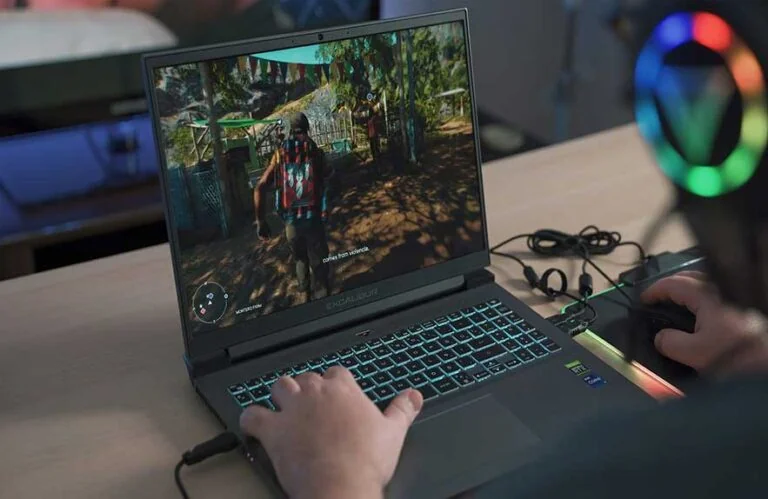
Gaming Laptop vs. Desktop Performance in 2025: Bridging the Divide or Widening the Gap?
The eternal debate between gaming laptops and desktops has evolved dramatically over the past decade, driven by relentless innovation in semiconductor technology, cooling solutions, and power efficiency. As we peer into 2025, the landscape of PC gaming is poised for further shifts, making the choice between a portable powerhouse and a stationary beast more nuanced than ever. This article will delve into a comprehensive performance comparison, predicting the state of gaming laptops and desktops in 2025, examining core components, practical considerations, and the overarching user experience.
I. The Evolving Landscape of 2025: Miniaturization Meets Raw Power
By 2025, the technology underpinning both gaming laptops and desktops will have undergone significant advancements. We anticipate the widespread adoption of next-generation CPU and GPU architectures, more efficient memory standards, and blistering-fast storage solutions. The key trend influencing this comparison is the continued miniaturization and power efficiency gains in mobile components. Laptop manufacturers will leverage advanced packaging techniques, sophisticated thermal designs (including vapor chambers, liquid metal, and potentially even more exotic cooling methods), and AI-driven power management to squeeze unprecedented performance out of compact form factors.
However, desktops, freed from the constraints of battery life and extreme portability, will continue to push the boundaries of raw power, higher thermal design power (TDP) limits, and multi-core scalability. The question isn’t whether desktops will remain more powerful, but rather how significant the performance gap will be, and at what cost – both monetary and in terms of convenience.
II. Core Performance Metrics: Head-to-Head in 2025
To understand the comparison, we must dissect the core components that dictate gaming performance:
A. Central Processing Unit (CPU):
In 2025, we’ll likely see CPUs from Intel (e.g., Arrow Lake/Lunar Lake successors) and AMD (e.g., Zen 6/7 architectures) boasting higher core counts, significantly improved single-threaded performance, and integrated AI accelerators.
- Desktop CPUs: Will maintain a distinct advantage in raw power. With higher TDP envelopes (150W+ for mainstream gaming, 250W+ for high-end), desktop CPUs will offer more sustained multi-core performance, crucial for demanding tasks like streaming, video editing, or running multiple applications alongside a game. Their larger heatsinks and cooling systems allow them to operate at peak boost frequencies for longer durations without thermal throttling.
- Laptop CPUs: Will be remarkably efficient and powerful. Leveraging advancements like hybrid core architectures (performance and efficiency cores) and aggressive power management, top-tier laptop CPUs will deliver exceptional single-core performance, often matching or even exceeding previous-generation desktop parts. For gaming, which is often more GPU-bound, the performance difference in 2025 between a high-end laptop CPU and a high-end desktop CPU will be negligible in many titles, especially at higher resolutions where the GPU becomes the primary bottleneck. However, sustained, heavy multi-threaded workloads will still favor the desktop.
B. Graphics Processing Unit (GPU):
This is historically the most significant differentiator, and while the gap will narrow, it will likely persist. NVIDIA (e.g., RTX 6000/7000 series) and AMD (e.g., Radeon RX 9000/10000 series) will have released their next-generation GPUs with significant architectural improvements, more RT cores, Tensor/Matrix cores, and larger VRAM capacities.
- Desktop GPUs: Will remain the undisputed champions of raw graphics power. Unconstrained by power delivery and thermal limits, desktop GPUs will feature higher core counts, higher clock speeds, and significantly larger TDPs (300W+ for high-end cards). This translates to superior performance at 4K resolution, higher frame rates, and the ability to comfortably handle demanding features like full path tracing, advanced AI rendering (DLSS/FSR 4.0+), and VR gaming with maximum fidelity. They will continue to offer the best performance-per-dollar ratio at the extreme high-end.
- Laptop GPUs: Will close the gap considerably, especially with the introduction of new architectural efficiencies and more advanced thermal solutions. High-end gaming laptops in 2025 will feature mobile GPUs with TGP (Total Graphics Power) ratings reaching 175W+, sometimes even higher with dynamic boost. These GPUs will deliver performance comparable to a desktop GPU from one or two generations prior, or a mid-to-high-range current-gen desktop card. For 1080p and 1440p gaming, the performance of top-tier gaming laptops will be phenomenal, often exceeding the refresh rates of their built-in displays. However, they will still struggle to match the very highest-end desktop GPUs at 4K max settings, especially in titles heavily utilizing ray tracing or demanding high VRAM. The key here is the TGP; a laptop GPU with a higher TGP will always outperform one with a lower TGP, even within the same model series.
C. Random Access Memory (RAM):
By 2025, DDR5 will be mature, and we might even see the early adoption of DDR6 in high-end platforms.
- Desktop RAM: Will offer greater flexibility. Desktops will typically feature four or more RAM slots, allowing for higher capacities (64GB, 128GB+) and easier upgrades. Speeds will continue to increase, with XMP/EXPO profiles pushing well beyond 8000MHz. For gaming, 32GB will be the sweet spot, with 64GB offering more headroom for multitasking or future-proofing.
- Laptop RAM: While fast, will often be soldered directly onto the motherboard in many models, limiting upgradeability. High-end laptops will offer 32GB or even 64GB as standard, but users might be stuck with that capacity for the laptop’s lifespan. Speeds will be optimized for the mobile platform, often slightly slower than top-tier desktop kits but still extremely capable for gaming. The performance impact of RAM speed beyond a certain point is generally less pronounced in gaming compared to CPU/GPU.
D. Storage (SSD):
PCIe Gen 5 NVMe SSDs will be standard, with Gen 6 potentially emerging in enthusiast platforms by 2025. These drives will offer sequential read/write speeds exceeding 10 GB/s and significantly improved random I/O.
- Desktop Storage: Will offer superior expandability. Motherboards will feature multiple M.2 slots (often 3-4), allowing for vast amounts of ultra-fast storage. Traditional SATA SSDs and HDDs will still be viable for mass storage.
- Laptop Storage: Will also utilize PCIe Gen 5 NVMe SSDs, delivering incredible load times. Many high-end laptops will offer two M.2 slots, providing good storage capacity and some upgrade potential. The primary difference will be the sheer volume of drives a desktop can accommodate. For gaming, both platforms will offer near-instantaneous load times, especially with OS-level optimizations like DirectStorage becoming more prevalent.
III. Beyond Raw Specs: Practical Considerations in 2025
Beyond the numbers, the choice between a gaming laptop and a desktop hinges on several practical factors:
A. Thermal Management:
This remains a critical battleground.
- Desktops: Benefit from ample space for massive air coolers, liquid cooling solutions (AIOs, custom loops), and superior airflow within larger cases. This allows components to run cooler and maintain peak boost clocks for extended periods, crucial for long gaming sessions or demanding workloads.
- Laptops: Have made incredible strides. Vapor chambers, larger fan arrays, thinner heatsinks, and even exotic phase-change materials are becoming common. AI-driven fan curves and power management further optimize cooling. While these advancements mean laptops can achieve impressive peak performance, they still generally struggle with sustained peak performance compared to desktops due to the inherent thermal density challenge. Expect laptops to still throttle performance slightly in very long, intense gaming sessions to manage heat.
B. Upgradeability and Longevity:
This is where desktops traditionally shine.
- Desktops: Are the kings of upgradeability. Users can independently upgrade the CPU, GPU, RAM, storage, power supply, and even the motherboard, extending the system’s lifespan and allowing for incremental performance boosts. This modularity means a desktop can remain a cutting-edge gaming machine for many years with strategic upgrades.
- Laptops: Remain inherently limited. While RAM and SSDs are often user-upgradable (though increasingly soldered RAM is a concern), the CPU and GPU are almost always soldered to the motherboard. This means a gaming laptop’s performance ceiling is largely fixed from the moment of purchase. To get significant performance improvements, a new laptop is typically required, leading to a potentially shorter lifespan for competitive gaming.
C. Portability and Form Factor:
This is the laptop’s undisputed domain.
- Laptops: Offer unparalleled mobility. An all-in-one solution that can be taken to LAN parties, friends’ houses, or on business trips. The ability to game on the go is their primary selling point. By 2025, high-end gaming laptops will continue to shrink in thickness and weight while retaining powerful components.
- Desktops: Are fixed installations. While mini-ITX builds offer some portability, they still require a monitor, keyboard, and mouse, making them cumbersome to move frequently. Their strength lies in providing a stable, dedicated gaming station.
D. Cost and Value Proposition:
The value equation becomes complex.
- Desktops: Generally offer a better performance-per-dollar ratio, especially at the high-end. Building a custom PC allows users to optimize spending on specific components. However, the initial cost doesn’t include peripherals (monitor, keyboard, mouse, speakers), which can add significantly to the total.
- Laptops: Carry a premium for their miniaturization and all-in-one convenience. A high-end gaming laptop will often cost more than a similarly performing desktop PC (excluding peripherals). However, if one considers the total cost including a quality monitor and peripherals for a desktop, the price difference can narrow considerably, making laptops a more attractive "single purchase" solution for some. Resale value can also be a factor, with laptops sometimes depreciating faster due to their fixed component set.
E. Peripherals and Ecosystem:
- Desktops: Offer ultimate freedom. Users can choose from an endless array of monitors (ultrawide, high refresh rate, high resolution, G-Sync/FreeSync), mechanical keyboards, ergonomic mice, and high-fidelity audio systems, creating a truly personalized gaming experience. Multi-monitor setups are effortless.
- Laptops: Come with integrated displays, keyboards, and trackpads. While many offer excellent high-refresh-rate screens and decent keyboards, they are fixed. External peripherals can be connected, effectively turning a laptop into a desktop experience, but this negates some of the portability advantages when at home.
F. Ergonomics and User Experience:
- Desktops: Allow for optimal ergonomic setups. A large monitor at eye level, a comfortable keyboard and mouse, and proper seating can prevent strain during long gaming sessions.
- Laptops: Often compromise on ergonomics. Smaller screens, keyboards that can feel cramped, and the need to look down can lead to discomfort over time. While external peripherals improve this, they add to the setup complexity.
IV. Use Cases and Recommendations in 2025
Given the anticipated advancements, the ideal choice will depend heavily on individual needs and priorities:
- The Dedicated Enthusiast/Competitive Gamer: Desktop will still be the preferred choice. For maximum frame rates, lowest latency, highest fidelity graphics (especially at 4K and beyond), future-proofing through upgrades, and the ultimate customizability, a desktop remains unmatched.
- The Content Creator/Streamer (Gaming-focused): Desktop will likely maintain its advantage. The extra CPU cores, abundant RAM, and superior cooling for sustained workloads make it better suited for simultaneously gaming, streaming, recording, and editing high-resolution content.
- The Student/Frequent Traveler/Digital Nomad: Gaming Laptop is the clear winner. The ability to take a powerful gaming machine anywhere is invaluable. Top-tier laptops in 2025 will offer "good enough" performance for virtually any game at high settings, making the compromise on raw power well worth the portability.
- The Hybrid User/Casual Gamer: A High-End Gaming Laptop could be an excellent compromise. For those who want to game seriously but also need a powerful portable machine for work, school, or occasional travel, a top-tier laptop offers immense flexibility without sacrificing too much performance.
- The Budget-Conscious Gamer: A Desktop (especially a self-built one) will likely offer the best performance-per-dollar. It allows for more precise budget allocation and easier upgrades down the line to spread costs.
V. Future Trends and Closing Thoughts
Beyond 2025, we can anticipate further convergence of mobile and desktop architectures, potentially blurring the lines even more. Cloud gaming services (e.g., Xbox Cloud Gaming, GeForce NOW) will continue to mature, offering an alternative for casual gamers who prioritize accessibility over owning powerful local hardware. Modular laptops with external GPU enclosures might become more mainstream, offering a bridge between the two form factors. AI will play an even larger role in optimizing performance, power consumption, and even game rendering across both platforms.
VI. Conclusion
In 2025, the performance gap between high-end gaming laptops and desktops will undoubtedly narrow further. Laptops will be astonishingly capable, offering a level of gaming fidelity and frame rates that would have been unimaginable a few years prior, all within sleek, portable packages. For 1080p and 1440p gaming, the difference in perceived performance for most users will be minimal.
However, the desktop will still hold the crown for ultimate, uncompromised performance. Its superior cooling capabilities, higher power limits, and unparalleled upgradeability mean it will always be able to push the absolute bleeding edge of graphics, achieve the highest frame rates at 4K and beyond, and offer a longer upgrade path.
The choice in 2025 will not be about which is "better" in absolute terms, but rather which form factor best aligns with your lifestyle, priorities, and budget. If maximum performance, future-proofing, and customizability are paramount, the desktop remains supreme. If portability, convenience, and a powerful all-in-one solution are your primary concerns, a high-end gaming laptop will deliver an incredibly satisfying experience. The era of compromise is not over, but the compromises themselves are becoming far less significant.
