
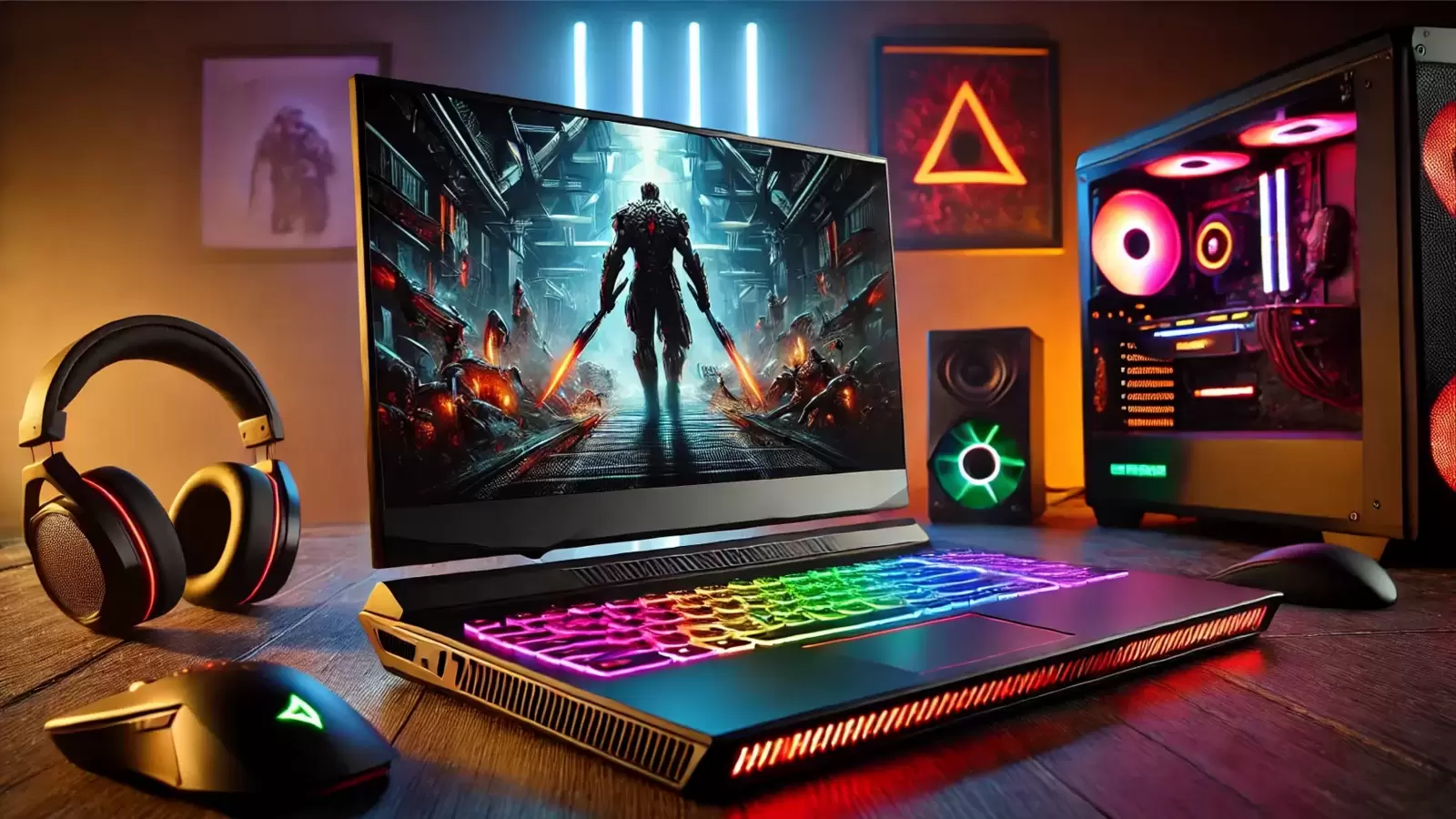
The Apex Predators: Best High-End Gaming Laptops Under Heavy Load in 2025
The year 2025 marks a pivotal moment in the evolution of portable gaming. No longer content with merely running games, the discerning enthusiast demands a machine that doesn’t just perform but excels under sustained, punishing loads. This isn’t just about hitting high frame rates at the start of a session; it’s about maintaining that blistering performance for hours, through the most demanding AAA titles, complex simulations, and even concurrent streaming and content creation tasks.
The "heavy load" scenario of 2025 implies pushing every component to its limit: rendering photorealistic worlds at 4K resolution with maxed-out ray tracing, juggling multiple high-refresh-rate external monitors, and running CPU-intensive background applications. This article delves into what defines the best high-end gaming laptops engineered to conquer such challenges, exploring the cutting-edge technologies that empower these portable powerhouses and identifying the likely contenders for the throne.
The Foundation of Ferocity: Core Components in 2025
By 2025, the internal architecture of high-end gaming laptops will have evolved significantly, moving beyond incremental upgrades to embrace revolutionary leaps in processing power, memory, and storage.
1. Central Processing Units (CPUs): The Brains of the Beast
Intel and AMD will continue their fierce rivalry, pushing the boundaries of core count, clock speed, and efficiency.
- Intel’s "Lunar Lake" / "Arrow Lake" Successors: Expect Intel’s high-end mobile CPUs to feature a hybrid architecture with an even more sophisticated mix of Performance-cores (P-cores) and Efficient-cores (E-cores). We’re looking at 16-24 cores (a blend of P and E) with P-core boost clocks potentially reaching 6.0 GHz+. Crucially, these chips will integrate advanced Neural Processing Units (NPUs) with significantly enhanced AI capabilities, offloading tasks like AI-driven upscaling, dynamic game asset loading, and even real-time NPC behavior calculations, freeing up the P-cores for pure gaming. Power efficiency will be paramount, allowing sustained high clock speeds without excessive thermal throttling.
- AMD’s "Zen 5+" / "Zen 6" Architectures (e.g., "Strix Point" / "Kraken Point" successors): AMD’s offerings will counter with their own highly optimized core designs, likely featuring up to 16 full-performance cores with exceptional Instruction Per Cycle (IPC) improvements. Expect boost clocks in the 5.8-6.2 GHz range. AMD’s integrated RDNA-based graphics (iGPUs) will also be incredibly powerful, not just for light gaming but for assisting dedicated GPUs in specific workloads or even for highly efficient power-saving modes. Their XDNA 2/3 AI Engines will provide a robust platform for AI acceleration, mirroring Intel’s NPU focus.
For heavy load, the key isn’t just raw core count but the ability of the cooling system to sustain high clock speeds across all active cores for extended periods. Both manufacturers will emphasize superior power delivery and thermal headroom.
2. Graphics Processing Units (GPUs): The Visual Powerhouse
The dedicated GPU remains the beating heart of a gaming laptop, and by 2025, we’ll see next-generation architectures pushing visual fidelity to unprecedented levels.
- NVIDIA’s "Blackwell" Successors (e.g., GeForce RTX 5090/5080 Mobile): NVIDIA’s dominance in ray tracing will likely continue, with 3rd or 4th generation RT Cores offering exponential performance gains. Tensor Cores will be significantly upgraded, powering DLSS 4.0 or even DLSS 5.0, which will be even more intelligent, leveraging AI to reconstruct frames with near-native quality and potentially generating entirely new frames (Frame Generation 2.0/3.0) with even lower latency. Expect 24GB+ of GDDR7 VRAM on the top-tier models, crucial for 4K textures and complex ray-traced environments. The Total Graphics Power (TGP) will routinely exceed 175W-200W, demanding robust cooling solutions.
- AMD’s RDNA 4 / RDNA 5 Architectures (e.g., Radeon RX 8000XT/8900XT Mobile): AMD will be aggressively challenging NVIDIA, particularly in rasterization performance and open-source upscaling technologies like FSR 3.0/4.0. Their next-gen RT accelerators will be highly competitive, aiming for parity or even superiority in specific ray-tracing workloads. Expect 20GB+ of GDDR7 VRAM on flagship models. AMD’s focus will also be on overall efficiency and leveraging their integrated ecosystem (Smart Access Memory, SmartShift) for optimal performance.
Crucially, the "heavy load" aspect demands GPUs that can sustain their maximum TGP for hours without throttling. This means not just powerful silicon but an exceptional thermal design to match.
3. Random Access Memory (RAM): The Speed Demon
By 2025, DDR5 RAM will be the absolute standard, with speeds reaching 6400MHz to 7200MHz or even higher. High-end laptops will feature a minimum of 32GB, with 64GB becoming commonplace, especially for users who game, stream, and create content simultaneously. The increased bandwidth of DDR5 is vital for feeding the hungry CPUs and GPUs, particularly in high-resolution gaming and complex multitasking scenarios.
4. Storage: Blazing Fast and Capacious
PCIe Gen 5 NVMe SSDs will be the norm for primary storage, offering blistering sequential read/write speeds of 12,000 MB/s to 14,000 MB/s+. These speeds drastically reduce game loading times, texture streaming stutter, and file transfer durations. Capacities will start at 2TB, with 4TB options becoming increasingly popular for gamers with extensive libraries. Some premium models might even feature dual PCIe Gen 5 slots for maximum flexibility and storage expansion.
The Unsung Hero: Cooling and Thermal Management
This is arguably the most critical aspect for a laptop performing under heavy load. Without exceptional cooling, even the most powerful components will throttle, negating their theoretical performance advantages.
- Advanced Vapor Chambers & Liquid Metal: By 2025, large, multi-zone vapor chambers will be standard, covering both the CPU and GPU. Liquid metal thermal paste will be factory-applied to both chips in virtually all high-end models, offering significantly better heat transfer than traditional thermal compounds.
- Next-Gen Fan Technology: Expect thinner, denser fan blades (e.g., 100+ blades per fan) made from advanced polymers or alloys, designed to move more air with less noise. Multi-fan setups (3-4 fans) with intelligently designed airflow paths will be common, ensuring heat is efficiently exhausted from the chassis.
- Dynamic Thermal Solutions: AI-driven thermal management systems will be highly sophisticated. They will not only monitor temperatures but also predict thermal spikes based on game profiles and user behavior, dynamically adjusting fan curves and power limits in real-time to prevent throttling before it even occurs.
- External Cooling Integration: While still niche, some manufacturers might offer more seamless integration with proprietary external liquid cooling solutions, allowing users to dock their laptops for desktop-level thermal performance during stationary heavy loads.
- Strategic Venting and Chassis Design: The internal layout will be meticulously engineered to minimize airflow obstruction. Chassis materials like magnesium alloy or carbon fiber will not only be lightweight but also aid in passive heat dissipation.
Immersive Visuals: The Display Experience
The display is the window into the game world, and by 2025, laptop panels will offer a feast for the eyes.
- Resolution and Refresh Rate: The sweet spot will evolve. For uncompromising detail, 4K (3840×2160) panels at 120Hz-144Hz will be prevalent. For competitive gamers prioritizing fluid motion, QHD (2560×1440) panels at 240Hz-360Hz will be the gold standard. Some niche models might even push into 1080p 480Hz territory, though this will be less common for "high-end" general use.
- Panel Technology:
- Mini-LED: Will be widely adopted, offering thousands of dimming zones for incredible contrast, deep blacks, and peak brightness of 1000 nits+ (HDR1000 certified). This delivers a stunning HDR experience that rivals OLED without the burn-in concerns.
- OLED: Will become more commonplace, particularly in thinner, lighter high-end models. Advances in panel technology will significantly mitigate burn-in risks, making them viable for gaming. OLED will offer infinite contrast and lightning-fast response times (<0.2ms).
- Advanced IPS: For those seeking a balance, next-gen IPS panels will offer excellent color accuracy, wide viewing angles, and rapid response times (1ms GtG) at competitive price points.
- Variable Refresh Rate: NVIDIA G-Sync and AMD FreeSync Premium Pro will be standard across all high-end panels, eliminating screen tearing and stutter for a perfectly smooth gaming experience.
- Color Accuracy: 100% DCI-P3 coverage will be expected, making these laptops suitable for content creation alongside gaming.
Beyond the Core: Essential Features for a Premium Experience
A truly high-end gaming laptop is more than just raw power; it’s a meticulously crafted ecosystem of components and features that enhance the overall user experience.
1. Power Delivery and Battery Life
- High-Wattage GaN Chargers: GaN (Gallium Nitride) technology will enable smaller, lighter power bricks capable of delivering 300W-360W, ensuring the laptop receives ample power to sustain maximum performance under load.
- Larger Batteries: While performance remains king, battery capacities will push the regulatory limits, with 90Wh-99.9Wh batteries becoming standard, offering reasonable unplugged usage for productivity, even if heavy gaming still requires a power outlet.
- USB-C Power Delivery: Bi-directional USB-C PD (up to 100W-140W) will be common, allowing for convenient charging from universal adapters when not gaming intensely.
2. Keyboard and Trackpad
- Optical or Low-Profile Mechanical Switches: Keyboards will feature advanced switches offering rapid actuation, excellent tactile feedback, and enhanced durability. Per-key RGB lighting with extensive customization will be standard.
- Precision Trackpads: Large, glass trackpads with excellent tracking and multi-touch gesture support will provide a premium feel for general use.
3. Connectivity
- Wi-Fi 7 (802.11be): Offering significantly lower latency and higher bandwidth than Wi-Fi 6E, Wi-Fi 7 will be crucial for competitive online gaming and rapid large file transfers.
- Bluetooth 5.4/6.0: Enhanced range, stability, and support for high-fidelity audio codecs.
- Thunderbolt 5 / USB4 v2: These ports will provide unparalleled bandwidth (80Gbps or even 120Gbps bi-directional), supporting multiple 8K displays, external GPUs, and blazing-fast external storage.
- Ethernet: A 2.5 Gigabit Ethernet port will remain a staple for stable, low-latency wired connections.
4. Audio
- High-Fidelity Speakers: Advanced speaker systems with dedicated woofers and tweeters, often tuned by audio experts (e.g., Dynaudio, Harman Kardon), will provide immersive sound.
- Integrated DACs/AMPs: High-end audio components will ensure pristine audio output for headphones, catering to audiophiles and competitive gamers who rely on sound cues.
5. Build Quality and Design
- Premium Materials: CNC-milled aluminum, magnesium alloy, and carbon fiber will be used for chassis construction, offering a balance of durability, rigidity, and aesthetic appeal.
- Refined Aesthetics: While still aggressive, designs will lean towards sleeker lines and less ostentatious RGB in some models, appealing to a broader audience. Thinner bezels will maximize screen real estate.
- Webcam and Microphones: Full HD (1080p) webcams with privacy shutters and advanced noise-canceling microphone arrays will be standard for streaming and communication.
6. Software Optimizations
- MUX Switches / Advanced Optimus: These will be universal, allowing users to toggle between dedicated GPU-only mode for maximum performance or hybrid mode for battery life, often automatically.
- Manufacturer Control Centers: Sophisticated software suites will provide granular control over performance profiles, fan curves, RGB lighting, and display settings, often with AI-driven recommendations.
- Driver Optimizations: Constant collaboration between hardware manufacturers and game developers will ensure day-one driver optimizations for new AAA titles.
The Contenders: Archetypes of 2025’s Gaming Elite
While specific models for 2025 are speculative, we can anticipate the philosophies and strengths of the leading brands:
-
The Uncompromising Powerhouse (e.g., MSI Titan GT Series, Alienware Area-51m/m18 successor):
- Philosophy: Absolute, no-holds-barred performance, prioritizing maximum TGP and CPU wattage above all else.
- Key Features: Largest chassis for superior cooling (often with external cooling integration options), desktop-grade components (or their mobile equivalents), potentially dual power bricks. Highest display refresh rates and resolutions.
- Target User: The enthusiast who demands the best performance money can buy, regardless of size, weight, or cost.
-
The Performance-Optimized Workhorse (e.g., ASUS ROG Strix Scar, Lenovo Legion Pro Series, Razer Blade 18 successor):
- Philosophy: Striking the perfect balance between top-tier performance and a more manageable form factor.
- Key Features: Excellent cooling within a relatively sleek design, powerful GPUs running at near-max TGP, premium displays, robust build quality. Often offers competitive pricing for the performance delivered.
- Target User: The serious gamer who wants desktop-like performance in a portable package, often also used for content creation or professional work.
-
The Sleek & Powerful (e.g., ASUS ROG Zephyrus, Razer Blade 16/14 successor, Alienware x-series successor):
- Philosophy: Delivering high-end performance in a remarkably thin and light chassis, often with a more refined aesthetic.
- Key Features: Advanced vapor chamber cooling optimized for slim designs, Mini-LED or OLED displays, high-wattage GaN chargers. May feature slightly lower sustained TGPs compared to the absolute behemoths, but still exceptionally powerful.
- Target User: The gamer who values portability and design as much as raw power, frequently traveling or using their laptop in professional settings.
Choosing Your 2025 Powerhouse
When selecting the best high-end gaming laptop under heavy load in 2025, consider these factors:
- Budget: These machines will command premium prices, likely starting from $3,000-$4,000 USD and escalating significantly for top-tier configurations.
- Primary Use Case: Are you purely gaming, or do you also stream, create content, or perform demanding professional tasks? This influences CPU/RAM/Storage priorities.
- Portability vs. Raw Power: How important is a slim profile and lighter weight compared to absolute maximum sustained performance?
- Display Preference: 4K for ultimate detail, QHD for competitive speed, or OLED for vibrant visuals and instant response?
- Brand Ecosystem: Do you have a preference for ASUS’s Armoury Crate, Razer’s Synapse, or Alienware’s Command Center?
The Future Beyond 2025
Looking even further, we might see the emergence of truly modular gaming laptops, advanced haptic feedback integrated into keyboards and trackpads, and deeper integration with AR/VR headsets through ultra-low-latency wireless protocols. The drive for more power in smaller packages will continue, fueled by innovations in material science, AI-driven optimization, and increasingly efficient power delivery.
Conclusion
The best high-end gaming laptops under heavy load in 2025 will be engineering marvels. They will not merely house the latest CPUs and GPUs but will integrate them into meticulously designed ecosystems focused on sustainable, unthrottled performance. From revolutionary cooling systems and blazing-fast storage to stunning displays and intelligent software, these machines will offer an unparalleled portable gaming experience. For the enthusiast seeking to conquer the most demanding digital worlds for hours on end, 2025 promises a new generation of apex predators, ready to redefine what’s possible in mobile gaming.
