The Canvas of Speed and Precision: A Deep Dive into the ROG Zephyrus G16’s Display Refresh Rate and Color Accuracy
In the fiercely competitive arena of high-performance laptops, the display is no longer just a window to your digital world; it is the very foundation of your experience. For gamers, it’s the difference between victory and defeat. For content creators, it’s the fidelity that brings visions to life. And for everyday users, it’s the vibrancy that makes every interaction a pleasure. ASUS’s Republic of Gamers (ROG) Zephyrus G16, a machine lauded for its blend of power, portability, and sleek design, understands this fundamental truth implicitly. Its display is not an afterthought but a cornerstone, engineered to deliver a visual experience that is both breathtakingly fast and exquisitely accurate.
This article delves deep into the two most critical aspects of the ROG Zephyrus G16’s display: its refresh rate and its color accuracy. We will explore the technical marvels that allow it to excel in both realms, catering to a diverse audience ranging from esports professionals demanding every frame to graphic designers requiring pixel-perfect color reproduction.
The Foundation: A Visual Powerhouse
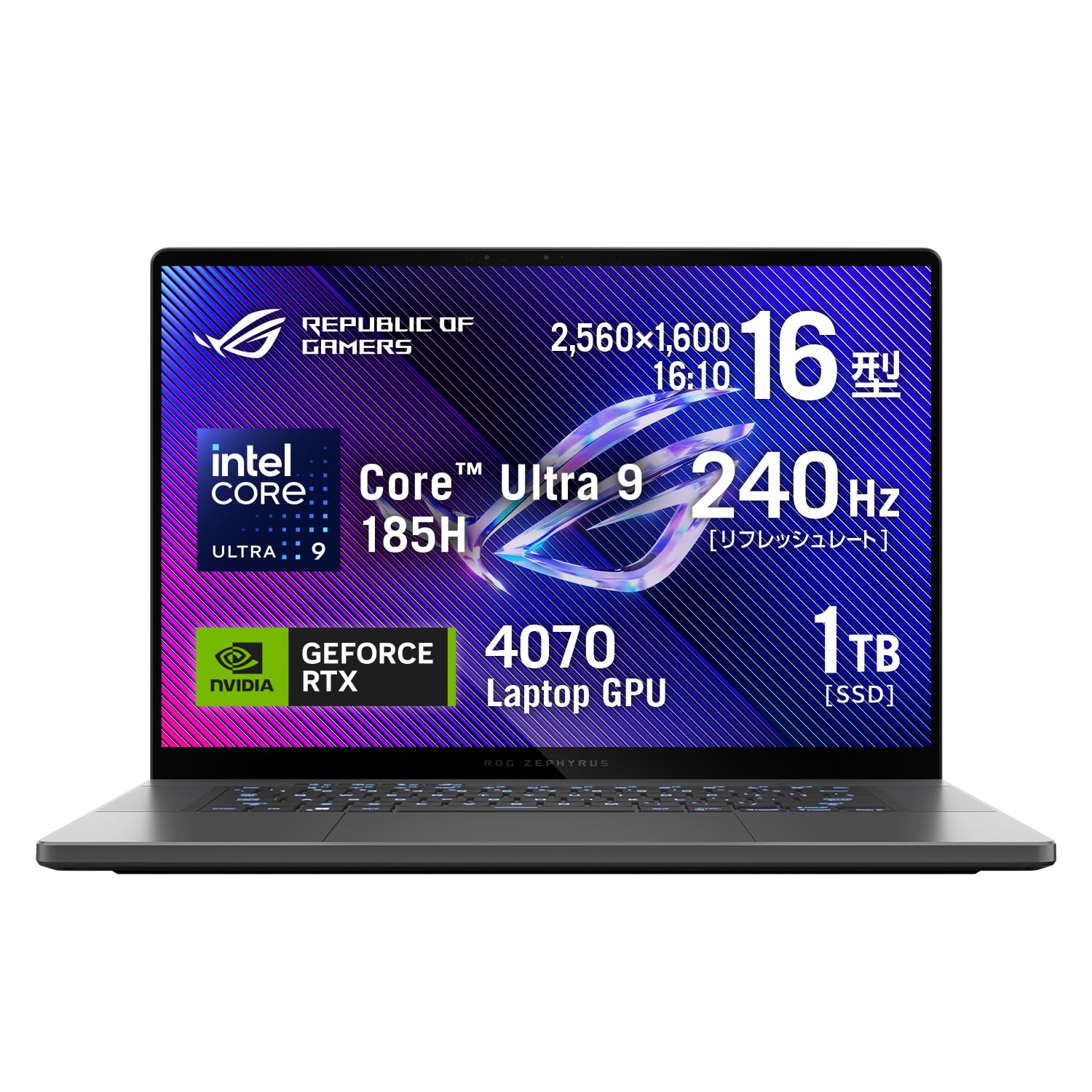
Before dissecting refresh rate and color accuracy, it’s crucial to acknowledge the overarching philosophy behind the Zephyrus G16’s display. ASUS typically outfits the G16 with a high-resolution, often QHD+ (2560×1600 or similar 2.5K resolution), 16:10 aspect ratio panel. This combination immediately sets a premium tone. The QHD+ resolution offers a crisp, detailed image that enhances both gaming immersion and productivity, providing more screen real estate vertically compared to traditional 16:9 displays. The 16:10 aspect ratio, in particular, is a boon for creators and multitaskers, offering a more expansive workspace without making the laptop unduly bulky.
Depending on the specific model year and configuration, the G16 may feature either a high-quality IPS-level panel or, in some premium configurations, a Mini LED display. While both offer excellent performance, the Mini LED variant takes visual fidelity to another level, particularly in terms of brightness, contrast, and HDR capabilities, which we will touch upon in the color accuracy section. Regardless of the underlying panel technology, the G16’s display is engineered for excellence, providing the perfect canvas for its advanced refresh rate and color accuracy features.
The Thrill of Speed: Unpacking Refresh Rate
The refresh rate of a display, measured in Hertz (Hz), refers to the number of times the image on the screen is updated per second. A higher refresh rate means a smoother, more fluid visual experience, and for the ROG Zephyrus G16, this is where it truly shines for gamers.
What is Refresh Rate and Why Does it Matter?
Imagine a flipbook: the more pages you flip per second, the smoother the animation appears. A display works similarly. A standard monitor often has a 60Hz refresh rate, meaning it updates the image 60 times per second. While adequate for everyday tasks, this rate can introduce noticeable motion blur and ghosting in fast-paced content, especially video games.
The Zephyrus G16 typically boasts refresh rates ranging from 165Hz to an astounding 240Hz, and sometimes even higher in the latest iterations. This means the display can refresh the image 165 to 240 times every second. The immediate benefit is an unparalleled sense of fluidity.
The Gaming Advantage:
For competitive gamers, a high refresh rate is not merely a luxury; it’s a strategic advantage.
- Reduced Motion Blur: In fast-moving scenes, such as first-person shooters or racing games, higher refresh rates drastically reduce motion blur. This allows players to track targets more accurately, react faster to on-screen events, and maintain a clearer view of the action. The difference between 60Hz and 165Hz is immediately perceptible, and the leap to 240Hz further refines this experience, providing an almost instantaneous visual feedback loop.
- Smoother Gameplay: When your graphics card is rendering frames at a high rate (e.g., 100+ frames per second), a low refresh rate display can’t keep up, leading to a choppy or stuttering experience. A 165Hz or 240Hz panel ensures that nearly every frame rendered by the powerful CPU and GPU combination within the G16 is displayed, resulting in a buttery-smooth gameplay experience. This smoothness reduces eye strain and enhances overall immersion.
- Faster Response Time: High refresh rate panels are often paired with low response times (measured in milliseconds, GtG or Grey-to-Grey). The G16’s display typically features a rapid response time, often around 3ms. While refresh rate dictates how often the image updates, response time dictates how quickly individual pixels change color. A low response time minimizes ghosting and smearing, ensuring that fast-moving objects leave minimal trails, further enhancing clarity and competitive edge.
Adaptive Sync Technology: The Game Changer
One of the most critical technologies complementing the G16’s high refresh rate is Adaptive Sync (either NVIDIA G-Sync Compatible or AMD FreeSync Premium, depending on the GPU configuration).
- Eliminating Tearing and Stuttering: Traditional displays have a fixed refresh rate. If the GPU renders frames at a different rate than the display refreshes, it can lead to "screen tearing" (where parts of multiple frames are displayed simultaneously) or "stuttering" (when the display waits for a new frame). Adaptive Sync synchronizes the display’s refresh rate with the GPU’s frame rate. This dynamic synchronization eliminates tearing and minimizes stuttering, resulting in an incredibly smooth and visually cohesive experience, regardless of frame rate fluctuations. This technology ensures that even if your frame rate dips below the maximum refresh rate, the visual experience remains seamless.
- Enhancing Immersion: By removing distracting visual artifacts like tearing, Adaptive Sync allows gamers to fully immerse themselves in the game world without interruptions, focusing purely on the gameplay.
Beyond Gaming: Benefits for Everyday Use
While primarily a gaming feature, a high refresh rate offers tangible benefits for general computing as well:
- Smoother Scrolling: Scrolling through web pages, documents, or long timelines in video editing software feels incredibly fluid and responsive.
- Improved Responsiveness: Any animation within the operating system, window resizing, or cursor movement benefits from the increased update rate, contributing to an overall snappier and more premium feel.
- Content Creation Timelines: Video editors will appreciate the smoother playback and scrubbing of timelines, making precise edits easier to manage.
The ROG Zephyrus G16’s dedication to high refresh rates, complemented by low response times and Adaptive Sync, unequivocally positions it as a top-tier choice for gamers who demand the absolute best in visual fluidity and responsiveness.
The Art of Precision: Exploring Color Accuracy
While speed is paramount for gaming, color accuracy is equally vital for a significant portion of the G16’s potential user base: content creators, graphic designers, photographers, video editors, and anyone who appreciates true-to-life visuals. The Zephyrus G16 does not compromise here, often featuring displays with exceptional color reproduction.
What is Color Accuracy and Why is it Important?
Color accuracy refers to how closely the colors displayed on a screen match the intended or real-world colors. For professionals, this is non-negotiable. A photographer needs to know that the red in their image is the exact shade of red they captured. A graphic designer needs to ensure their client’s brand colors are rendered consistently. Even for general media consumption, accurate colors lead to a more immersive and visually pleasing experience, making movies and photos look more lifelike.
Understanding Color Gamuts:
Color accuracy is typically measured by how well a display covers specific color gamuts. The G16’s display often excels in covering the most important ones:
- sRGB (Standard Red Green Blue): This is the most common color space, used for the vast majority of web content, standard digital cameras, and everyday applications. A display with 100% sRGB coverage ensures that colors in these contexts are rendered precisely as intended. The G16 typically achieves full 100% sRGB coverage, making it excellent for general use and entry-level content creation.
- DCI-P3 (Digital Cinema Initiatives – Protocol 3): This is a wider color gamut, primarily used in professional film production and digital cinema. It covers a significantly broader range of colors, especially in the red and green spectrum, compared to sRGB. Many high-end G16 displays, particularly those with Mini LED technology, boast 100% DCI-P3 coverage. This makes the G16 an excellent tool for video editors, filmmakers, and digital artists working on projects destined for cinematic release or platforms that support wide color gamuts.
- Adobe RGB: Another wide color gamut, often used by photographers and print designers, as it encompasses a broader range of cyan and green tones relevant for print media. While some professional monitors target Adobe RGB, the G16’s focus is usually on sRGB and DCI-P3, which are more relevant for its primary gaming and digital content creation audience. However, strong DCI-P3 coverage often correlates with good performance in other wide gamuts.
Delta E Values: The Metric of Precision
Beyond simply covering a color gamut, the precision of those colors is measured by a metric called Delta E (ΔE). Delta E quantifies the difference between a displayed color and its true color.
- ΔE < 1.0: Generally considered imperceptible to the human eye, representing near-perfect accuracy.
- ΔE < 2.0: Excellent accuracy, suitable for professional work.
- ΔE < 3.0: Good accuracy, acceptable for most users.
ASUS often factory-calibrates the G16’s display to ensure a low Delta E value, typically aiming for ΔE < 2.0 or even lower. This factory calibration is a significant advantage, as it means users can enjoy accurate colors right out of the box without needing expensive calibration hardware. For professionals, this saves time and provides immediate confidence in their visual workflow.
HDR Support, Brightness, and Contrast: The Mini LED Advantage
While IPS panels offer good brightness and contrast, the G16’s premium Mini LED options elevate the visual experience to new heights, especially concerning High Dynamic Range (HDR) content.
- Brightness (Nits): Mini LED panels can achieve significantly higher peak brightness levels, often exceeding 500 nits and sometimes reaching 1000 nits for HDR content. This extreme brightness makes HDR content truly pop, with dazzling highlights and brilliant details.
- Contrast Ratio and Local Dimming: Mini LED technology employs thousands of tiny LEDs grouped into hundreds or even thousands of local dimming zones. Each zone can be individually brightened or dimmed. This allows for incredibly precise control over backlighting, resulting in vastly superior contrast ratios compared to traditional IPS displays. Deep, inky blacks can coexist with bright, vivid highlights on the same screen, leading to a stunning sense of depth and realism in HDR content. This is particularly impactful for movies, games, and any visual media designed to leverage HDR.
- Vibrant Visuals: The combination of wide color gamut, high brightness, and exceptional contrast creates a display that renders colors with breathtaking vibrancy and realism, making every piece of content more engaging and immersive.
Panel Uniformity:
For content creators, uniformity across the screen is also crucial. A display might have great overall color accuracy, but if the corners are dimmer or have a color shift, it can compromise professional work. ASUS typically ensures good panel uniformity on the G16, minimizing these discrepancies for a consistent visual field.
Synergy: Where Speed Meets Precision
The true brilliance of the ROG Zephyrus G16’s display lies not just in its individual strengths but in how refresh rate and color accuracy complement each other. It’s a display that doesn’t force users to choose between a fluid gaming experience and an accurate creative workspace.
Imagine editing a high-frame-rate video. The G16’s high refresh rate ensures smooth timeline scrubbing and playback, allowing for precise cuts and adjustments. Simultaneously, its excellent color accuracy guarantees that the colors you see on screen are true to life, preventing costly errors in color grading. Or consider a game with stunning art direction: the high refresh rate makes the action incredibly fluid, while the wide color gamut and accurate reproduction ensure that the artist’s intended palette is fully realized, enhancing immersion.
This synergy means the Zephyrus G16 is a genuine "no-compromise" machine. It offers a premium visual experience that empowers both the competitive gamer and the discerning content creator, making it a versatile powerhouse for any demanding task.
User Experience and Target Audience
The ROG Zephyrus G16’s display caters to a broad spectrum of users:
- Esports Enthusiasts & Competitive Gamers: They will appreciate the ultra-high refresh rates, low response times, and Adaptive Sync, which provide a critical edge in fast-paced games.
- Casual Gamers: They will enjoy a vastly more immersive and enjoyable experience compared to standard displays, with smoother motion and vibrant visuals.
- Photographers & Graphic Designers: The extensive color gamut coverage (especially DCI-P3), low Delta E values, and factory calibration offer a reliable platform for accurate image and design work.
- Video Editors & Filmmakers: The high resolution, 16:10 aspect ratio, high refresh rate for smooth playback, and wide color gamut (particularly DCI-P3 for cinematic color) make it an excellent portable editing suite.
- General Users & Media Consumers: Anyone who values a premium visual experience will benefit from the crisp QHD+ resolution, vibrant colors, and fluid motion for everyday computing, browsing, and media consumption.
Conclusion
The ROG Zephyrus G16’s display is a testament to ASUS’s commitment to delivering a comprehensive, high-performance user experience. By meticulously engineering panels that excel in both refresh rate and color accuracy, the G16 transcends the traditional boundaries of a gaming laptop. It offers gamers the blistering speed and responsiveness required for competitive play, eliminating tearing and motion blur to provide an unadulterated, fluid experience. Simultaneously, it provides content creators with the precise, vibrant, and true-to-life color reproduction essential for professional work, backed by wide gamut coverage, low Delta E values, and often, the stunning capabilities of Mini LED technology.
In an era where visual fidelity is paramount, the Zephyrus G16’s display stands as a beacon of excellence. It’s a canvas where speed and precision coalesce, providing a truly immersive and reliable visual interface that empowers users to achieve more, whether dominating virtual battlegrounds or crafting their next masterpiece. For those seeking a laptop that makes no compromises on one of the most critical components – the window to their digital world – the ROG Zephyrus G16’s display is undeniably a compelling and future-proof choice.